- Test Data Types
 Raw
Raw- Parameter
- Runtime
- Random
- Data Generator
- Phone Number
- Mail Box
- Environment
- Concat Test Data
- Folder Structure for Test Data Profiles
- Create Test Data Profile
- Update Test Data Profile
- Update Value in Test Data Profile
- Import Test Data Profile
- Bulk Deletion of a Test Data Profile
- Create Test Data [Environment]
- data generators
- Default Test Data Generators
- Address Function Type
- ChangeDataType Function Type
- Company Function Type
- DateFunctions Function Type
- DomainFunctions Function Type
- EmailFunctions Function Type
- File Function Type
- Friends Function Type
- IdNumber Function Type
- Internet Function Type
- MailboxAliasFunctions Function Type
- MailboxFunctions Function Type
- Name Function Type
- NameFunctions Function Type
- Number Function Type
- NumberFunctions Function Type
- Phone Number Function Type
- PhoneNumberFunctions Function Type
- Random String Function Type
- RandomText Function Type
- StringFunctions Function Type
- TestDataFromProfile Function Type
File Function Type
You can generate and manage various file-related data. This functionality is useful for handling files with specific attributes like file extensions, MIME types, and file names. Creating diverse file data for different applications can make file-handling tasks more efficient and organized.
Prerequisites
Before you begin, ensure that you have referred to:
Selecting File as a Function Type for Data Generator
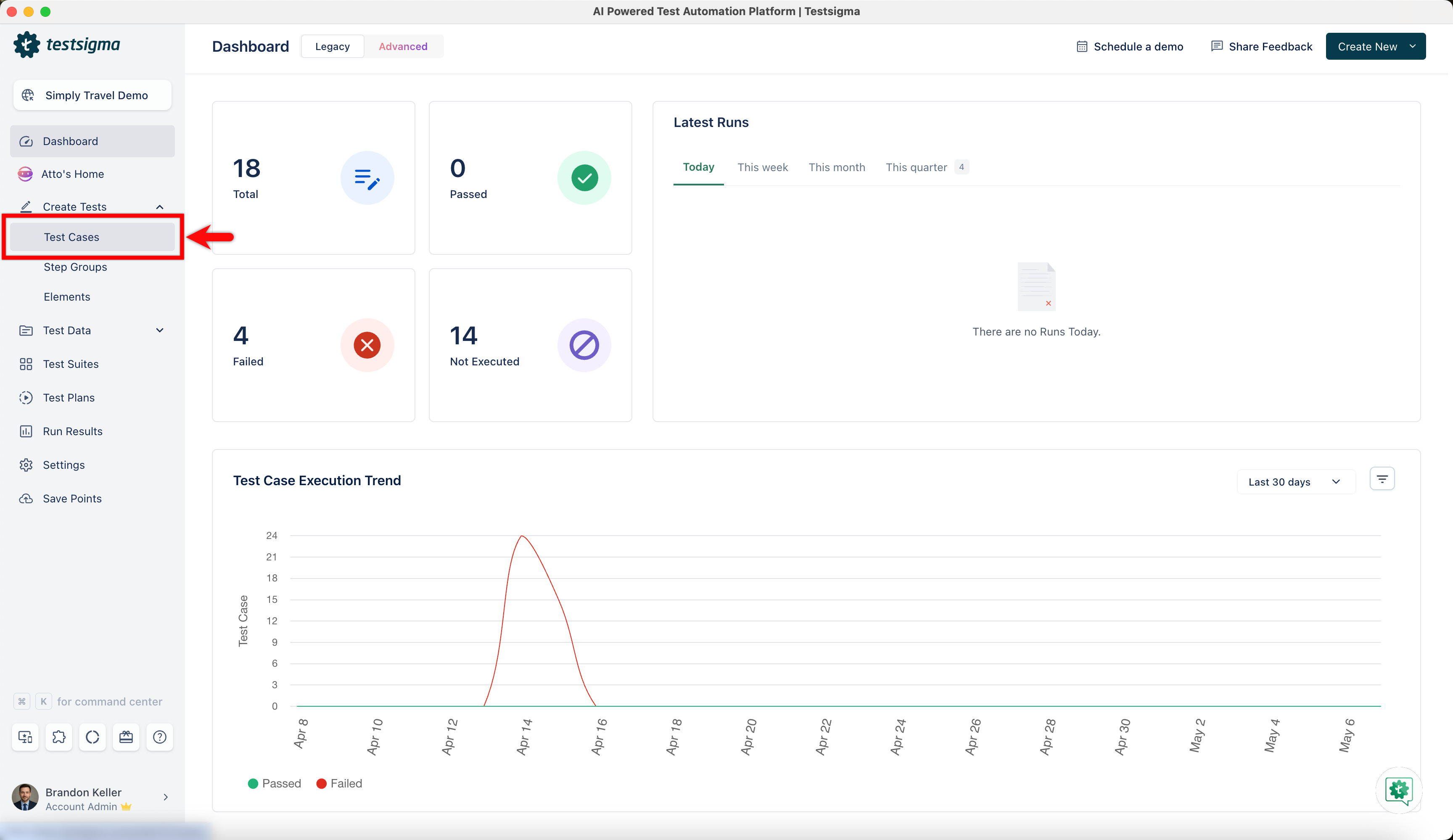
- From the left navigation bar, go to Create Tests > Test Cases and create a new test case.
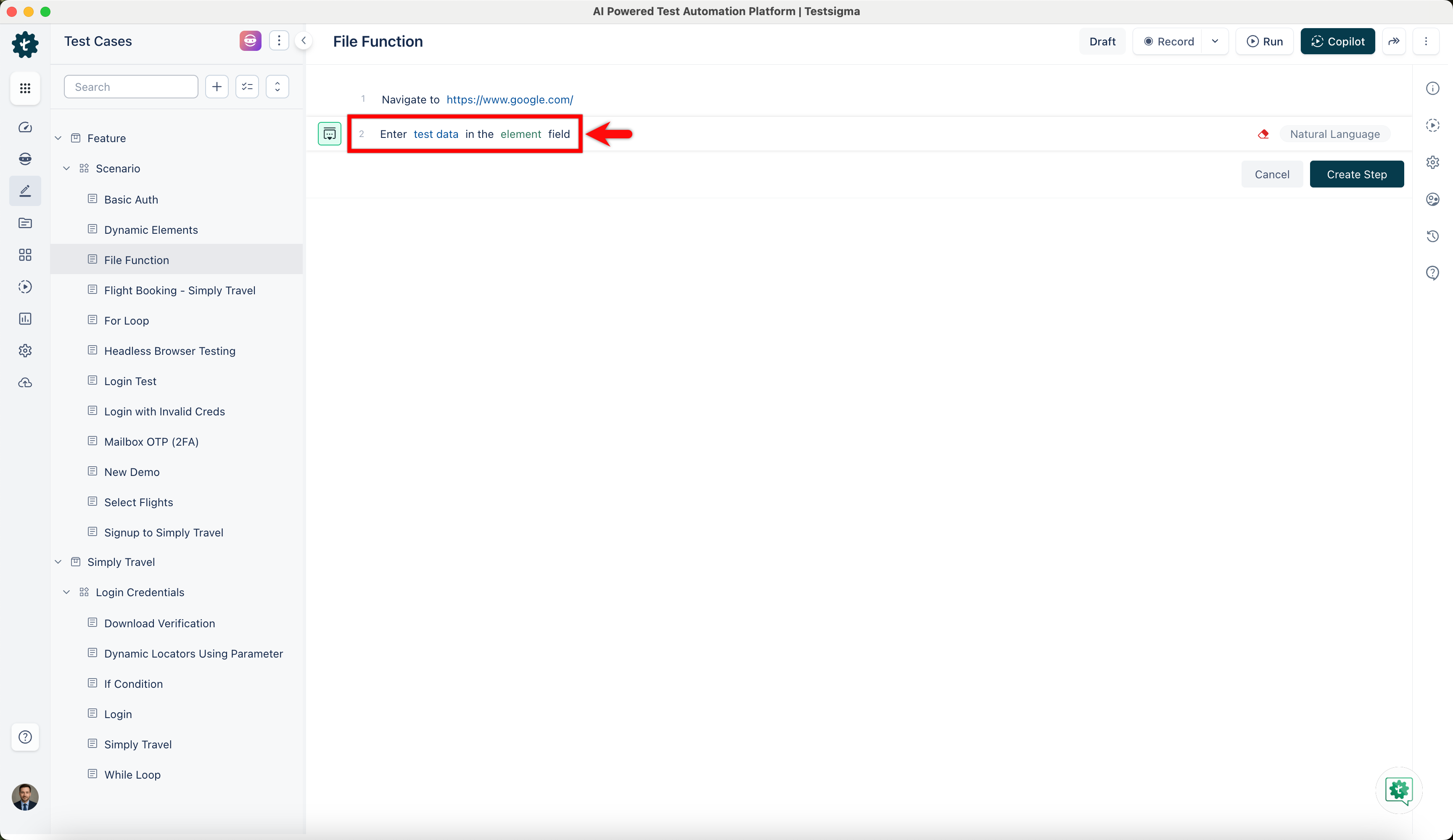
- Use NLP to create a new step in the test case and include a placeholder for test data.
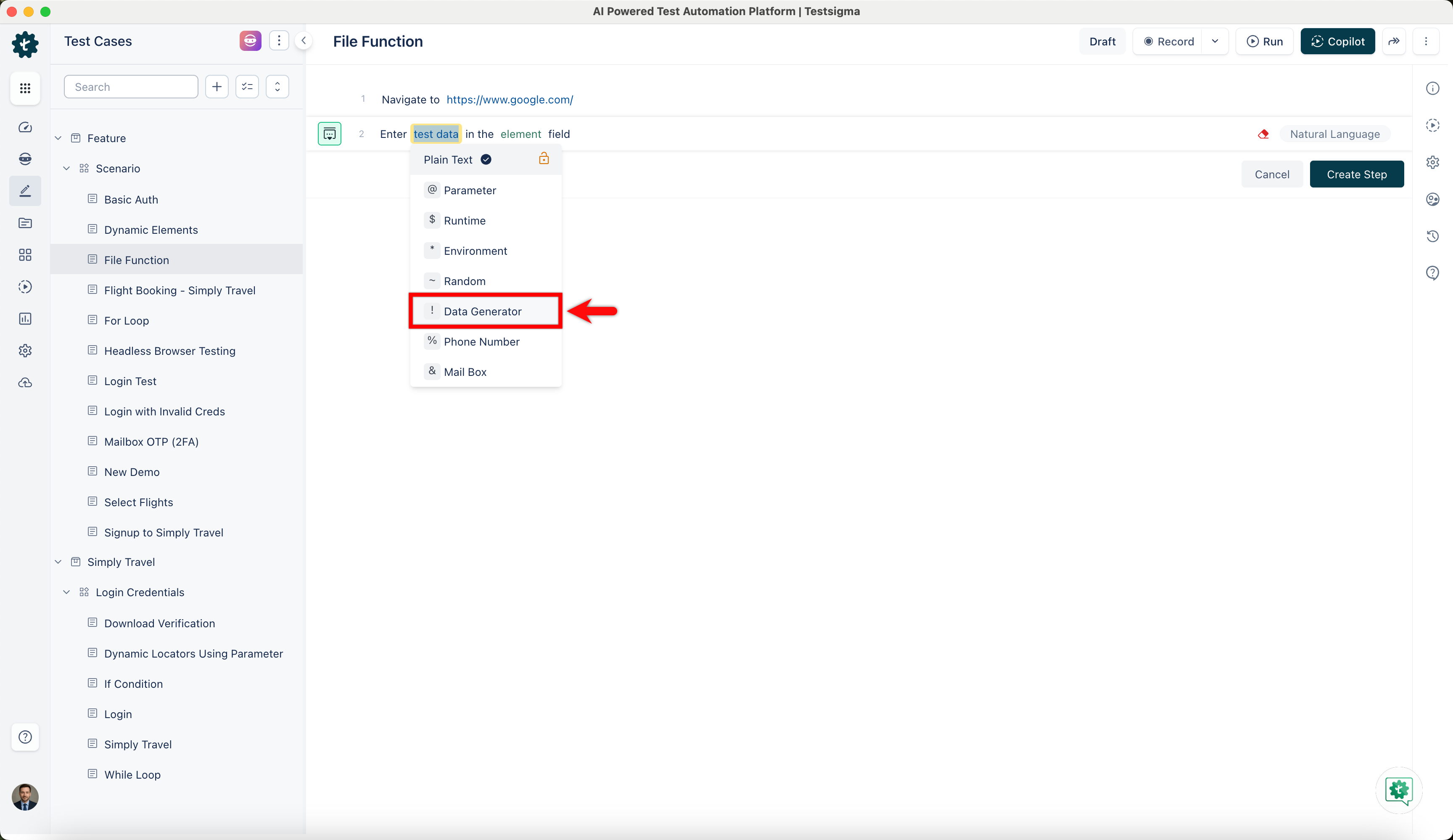
- Click on the test data placeholder. From the Test Data Types dropdown menu, select the ! Data Generator option.
- On the ! Data Generators overlay screen, select the Type to Default. This will enable you to use a collection of built-in test data generators.
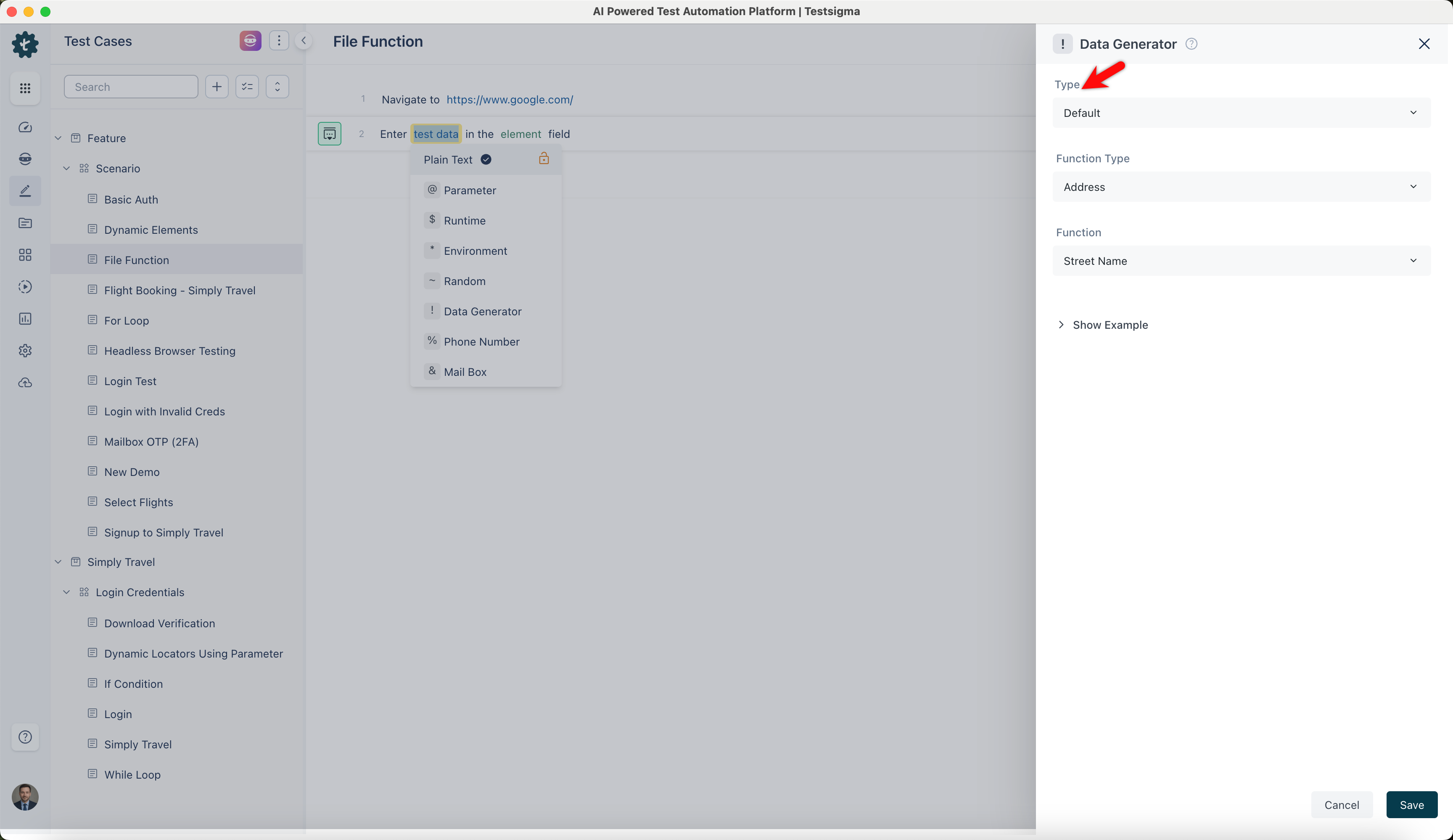
- Select File from the Function Type dropdown list.
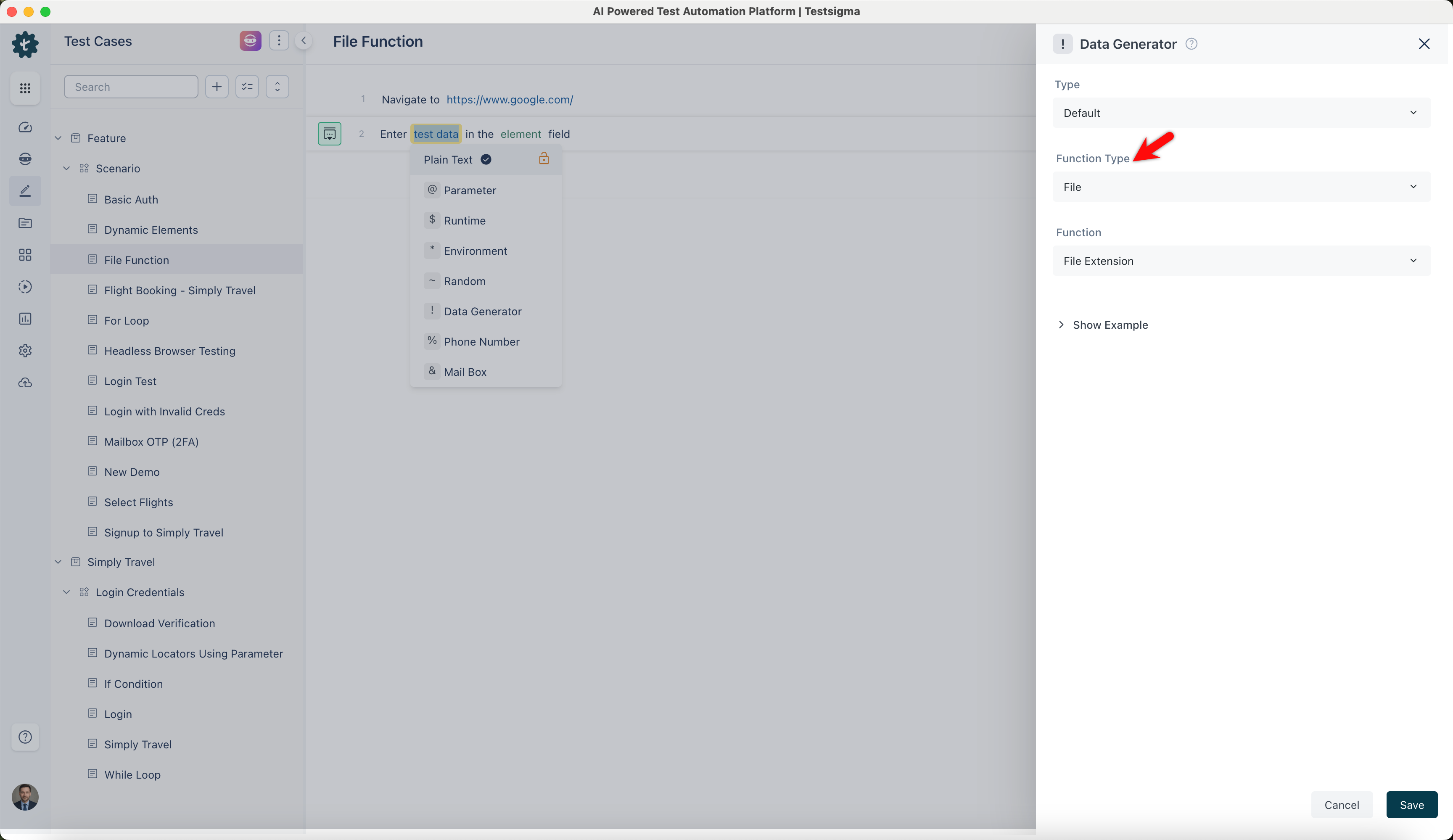
NOTE:
This action will display a list of built-in functions associated with the File function type, enabling you to select the appropriate function based on your requirements.
Extension
- Allows you to specify the type of file by adding a file extension. It helps in identifying the type of file.
ℹ️Example:
- Input: None (This function does not require any specific input)
- Output:
- html
- docx
- tiff
- js
MIME Type
- Allows you to identify the format and nature of a file using MIME types. It helps applications recognize the type of file being processed.
ℹ️Example:
- Input: None (This function does not require any specific input)
- Output:
- application/font-woff
- text/xml
- model/mesh
- audio/vorbis
File Name with Directory Path
- Allows you to assign a specific name to a file, including the file extension. It helps in organizing and identifying files.
ℹ️Example:
- Input: None (This function does not require any specific input)
- Output:
- blanditiis_minus/at.json
- nihil_autem/assumenda.css
- quis_sit/est.wav
- voluptatem_nisi/quas.jpeg
Generate Filename based on Provided Arguments
- Allows you to generate a filename based on specific provided arguments, ensuring customized file naming.
ℹ️Examples:
| Input | Output |
|---|---|
| arg0: /documents arg1: / arg2: annual_report arg3: .pdf |
/documents/annual_report.pdf |
| arg0: /spreadsheets arg1: / arg2: sales_data arg3: .xlsx |
/spreadsheets/sales_data.xlsx |
| arg0: /presentations arg1: / arg2: company_meeting arg3: .pptx |
/presentations/company_meeting.pptx |
| arg0: /data arg1: / arg2: customer_list arg3: .csv |
/data/customer_list.csv |

Want to contribute or report missing content?