- desired capabilities
 Most Common Desired Capabilities
- Browser Console Debug Logs
- Geolocation Emulation
- Bypass Unsafe Download Prompt
- Geolocation for Chrome & Firefox
- Custom User Profile in Chrome
- Emulate Mobile Devices (Chrome)
- Add Chrome Extension
- Network Throttling
- Network Logs
- Biometric Authentication
- Enable App Resigning in iOS
- Enable Capturing Screenshots (Android & iOS)
- Configure Android WebViews
- Incognito/Private mode
- Set Google Play Store Credentials
- Basic Authentication [Safari]
Emulate Mobile Devices with Chrome Browser
Chrome Browser provides a built-in feature to emulate mobile device screen resolutions. This can be useful for testing the responsiveness of your website on mobile devices, without the time and effort required to set up a full mobile automation system. You can test for mobile even without a dedicated device.
Obtaining the device name
1.Open the Browser Developer Console by pressing the F12 key or Ctrl+Shift+I (For Mac, Command+Shift+I). You can also right-click on any web page and select ‘Inspect’ from the menu to open the ‘Developer Console - Elements’ Tab.
2.Click on the Device Selection toggle on the top left corner of the Developer Console Area. Once enabled, the icon turns Blue.
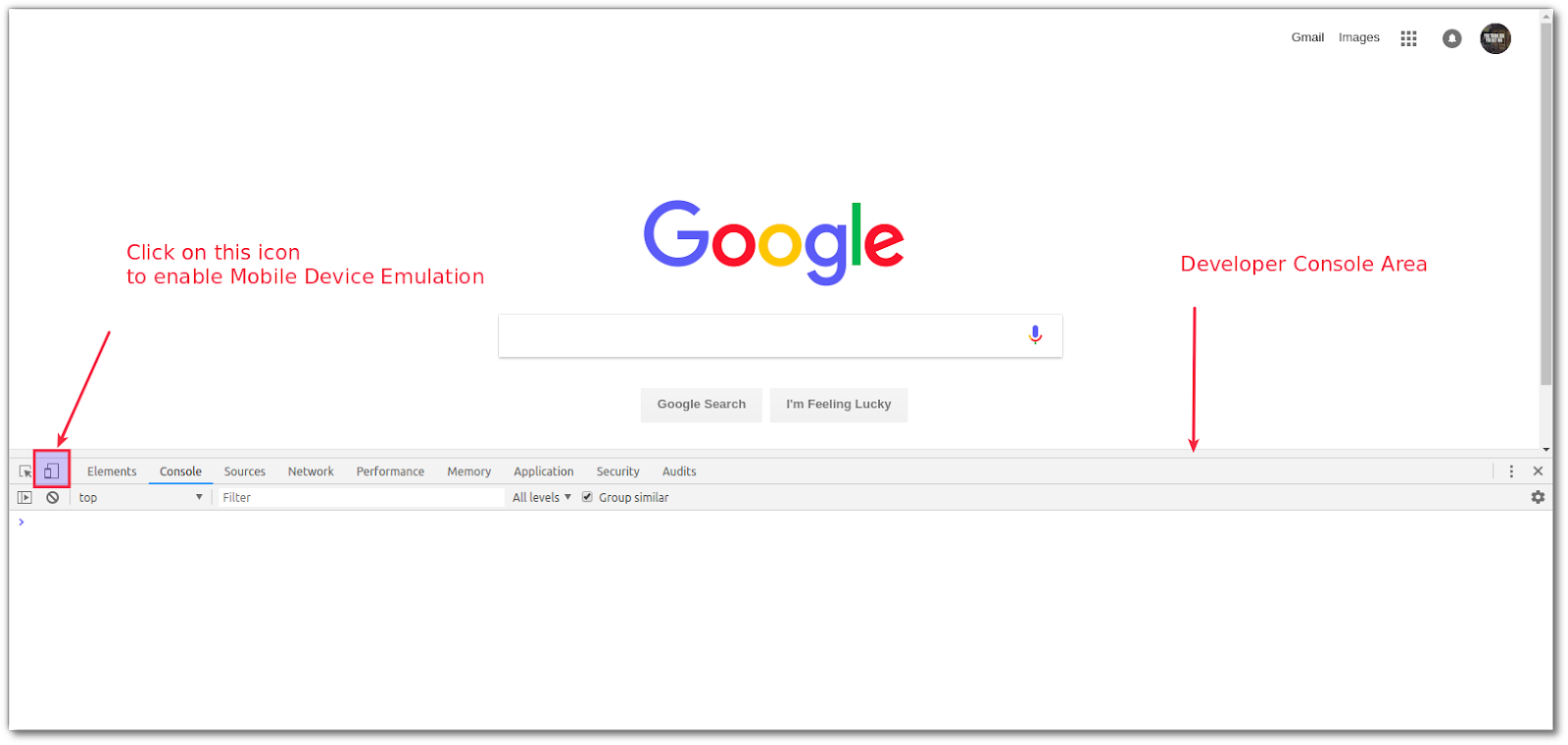
3.Check the first dropdown on the top bar to find the list of available devices.
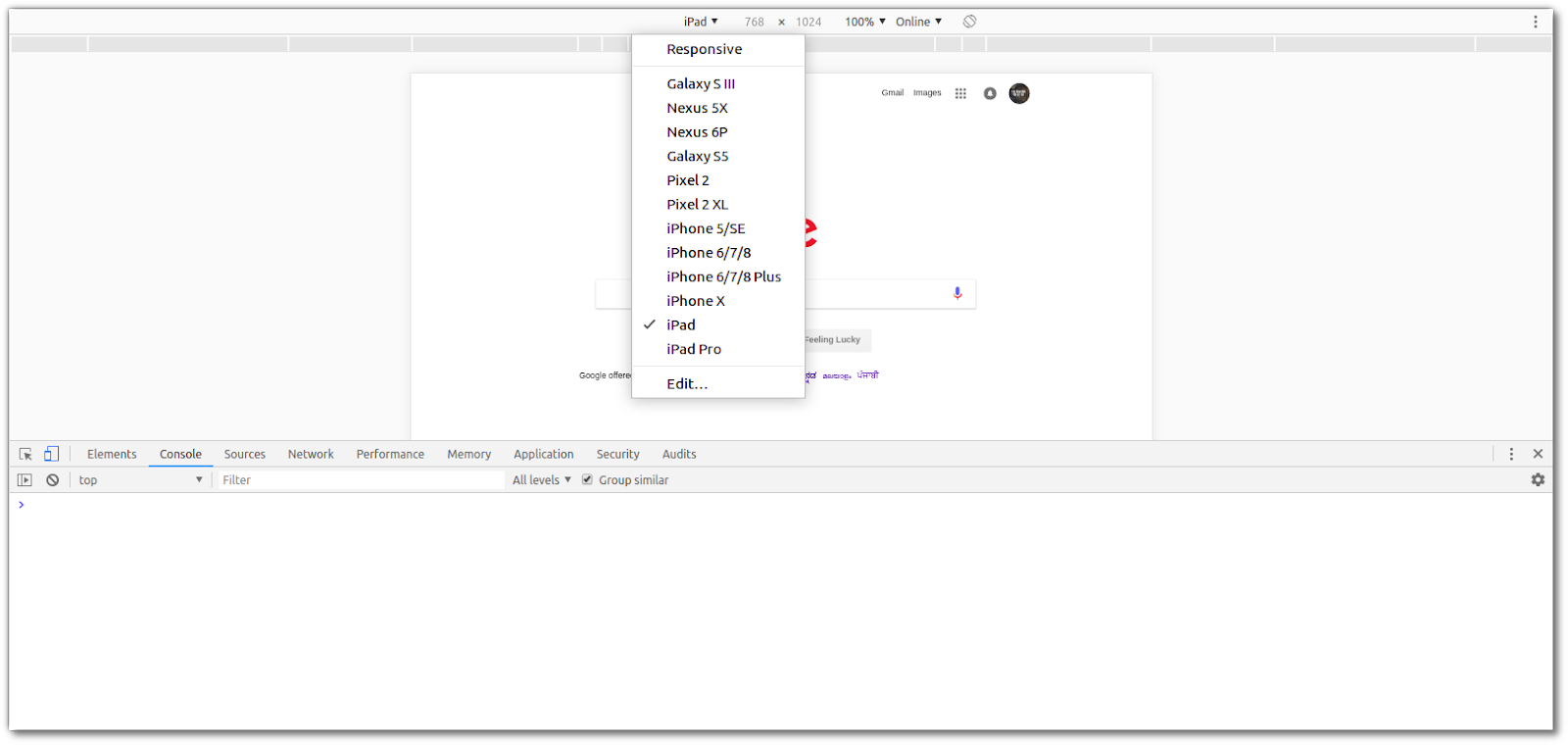
4.Select your desired device from the list of available devices. For instance, we can select the device "iPad" from the list as shown above and it will update the viewport as per the display dimensions of the selected device.
5.Select the last option - ‘Edit’ in the device selection menu to see the full list of available devices and also add your own devices.
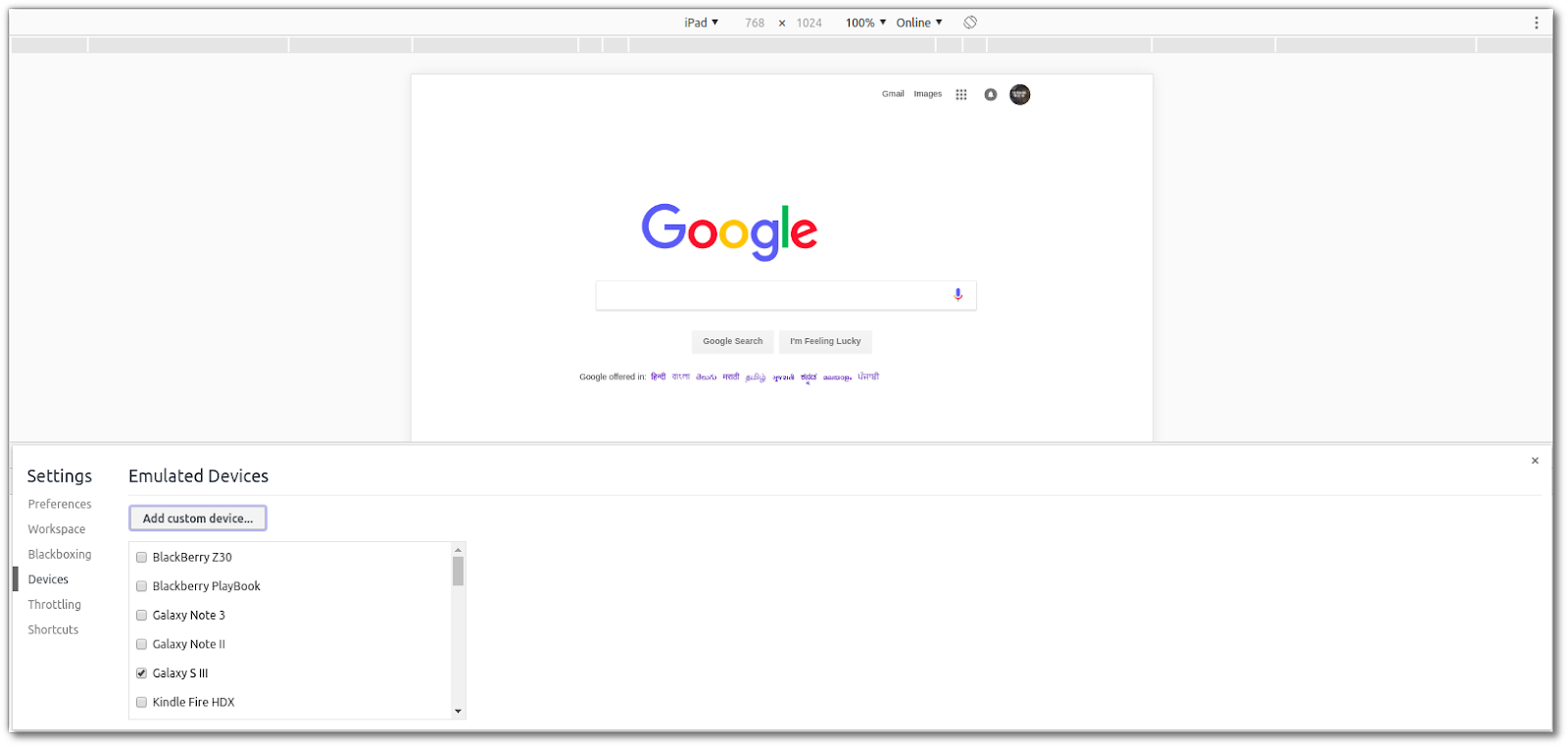
You can use the name of any of the above-given default devices while automating Tests on Testsigma.
This is possible by specifying the device name in the Desired Capabilities while defining a Test Environment as shown in the next section.
Using available Devices for emulation
You should already know how to add Desired Capabilities to your Tests. Refer to the documentation on managing desired capabilities.
Select the latest version of Google Chrome for your preferred OS and enter the following values below the Desired Capabilities field:
| Name | Data Type | Value |
|---|---|---|
| goog:chromeOptions | String | {"mobileEmulation":{"deviceN ame":"iPhone X"}} |
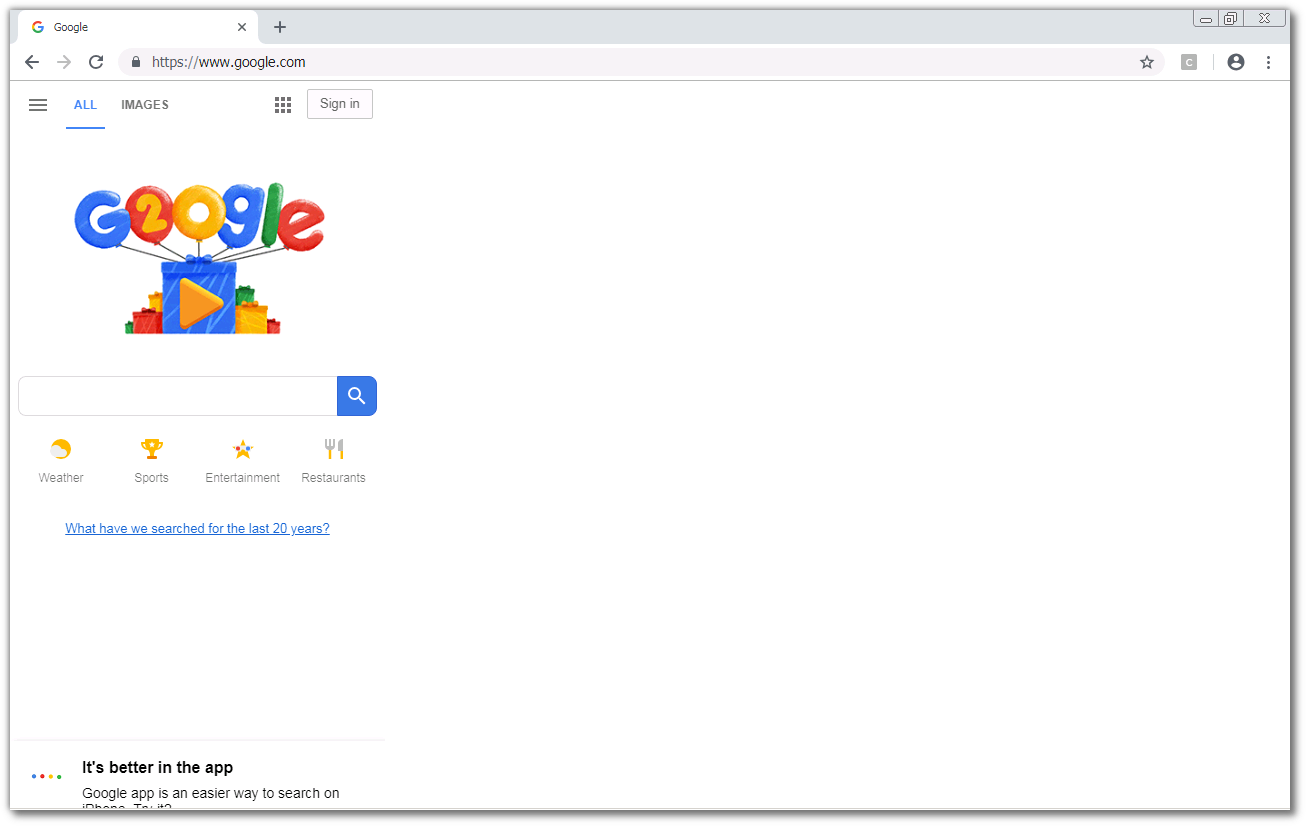
On execution, it will display as mobile device view as shown here:
Advanced: Using a Custom Device for emulation
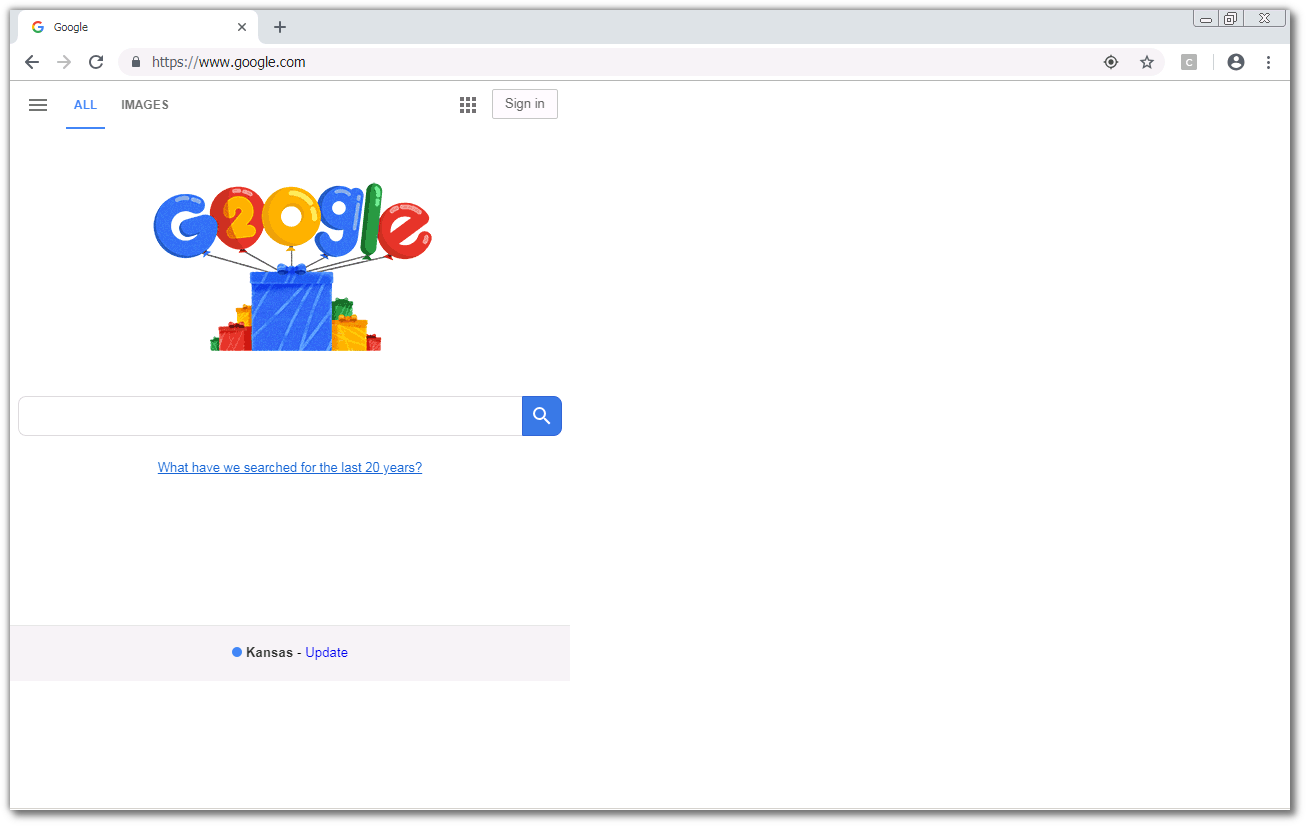
You can use a custom Device Resolution by providing the width, height, pixelRatio and userAgent values.
Enter the following values in the Desired Capabilities field:
| Name | Data Type | Value |
|---|---|---|
| goog:chromeOptions | String | {"mobileEmulation": { "deviceMetrics": { "width": 560, "height": 600, "pixelRatio": 3.0 }, "userAgent": "Mozilla/5.0 (Linux; Android 4.2.1; en-us; Nexus 5 Build/JOP40D) AppleWebKit/535.19 (KHTML, like Gecko) Chrome/18.0.1025.166 Mobile Safari/535.19" }} |
On execution, it will display as mobile device view as shown:

Want to contribute or report missing content?