
Generate Test Cases for Salesforce
You can quickly generate test cases for Salesforce requirements in Testsigma using GenAI. This feature allows you to import Epics or Stories from your Jira project and generate test cases using simple prompts. This article discusses generating test cases for Salesforce using Jira stories & prompts in Testsigma.
Prerequisites
Before you begin, ensure that,
- Your Salesforce instance contains active Flows or Workflows and is connected to Testsigma.
- You have referred to the documentation on creating test cases.
- You have referred to the documentation on creating projects.
Generate Test Cases for Salesforce
- From the left navigation bar, go to Atto’s Home and click Generate with AI.
- On the Generate Test Cases page, click Jira Requirements.
-
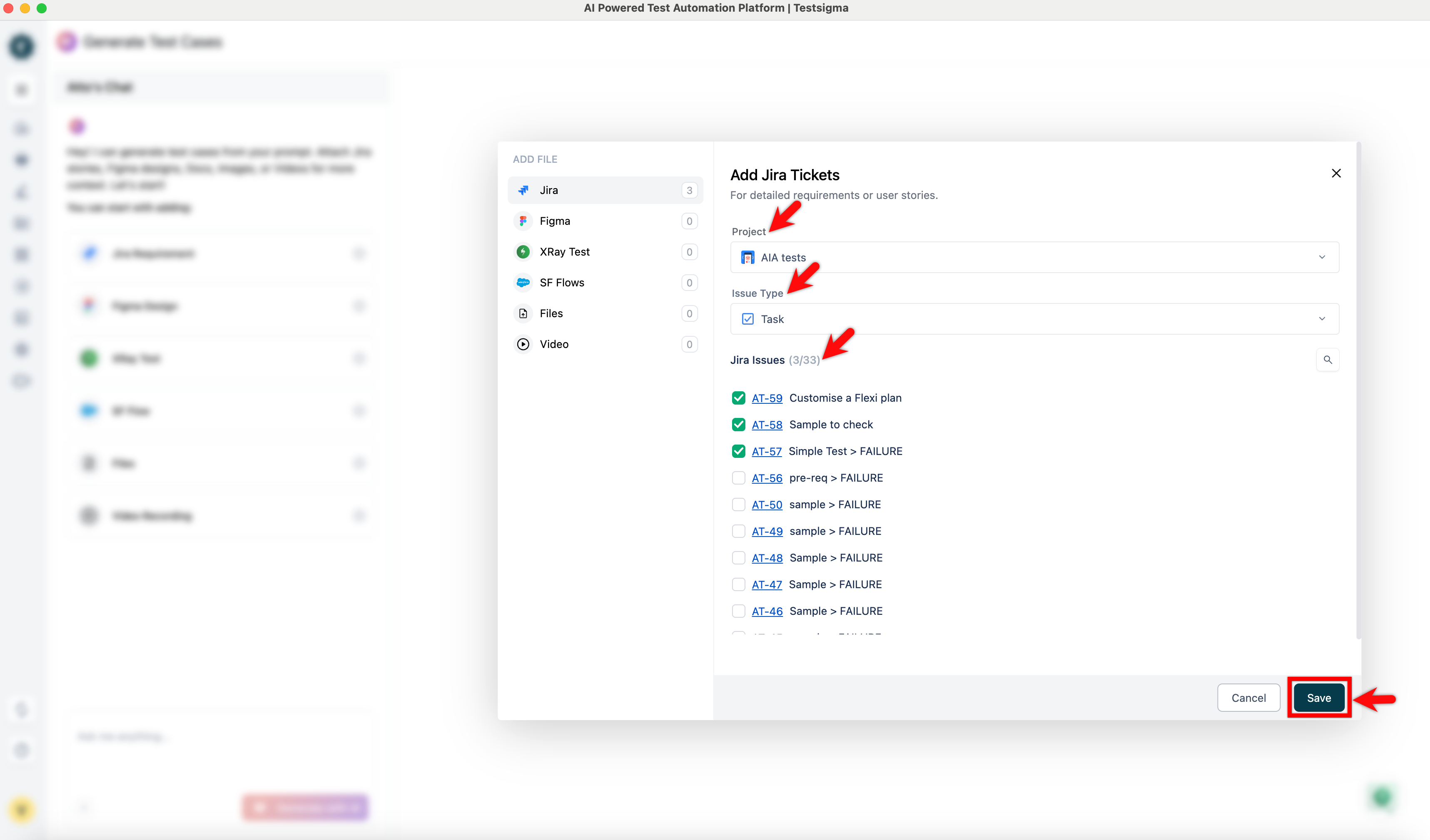
In the Add Jira Tickets dialog,
- From the Jira Project dropdown, select a project.
-
Under Issue Type, select either Epic or Story:
- If you select Epic, choose the stories under that epic.
- If you select Story, choose the stories you want to generate test cases for.
- Select the stories/epics for which you want to generate test cases and click Save.
- In the Prompt box, enter a detailed prompt that describes test cases want to generate.
- The Read existing test case library checkbox is selected by default. Clear this checkbox if you do not want the system to consider existing test cases while generating new ones.
NOTE:
- Once the Read existing test case library option is enabled, it cannot be unselected during the same session. The selection remains applicable throughout the session. However, you can enable this option at any time during a session if it was not selected earlier.
- Click Generate with AI.
- Wait for Generator Agent to generate the test cases based on the selected stories and prompt.
- After the test cases are generated, expand a category and select a test case.
- In the Test Case Details dialog, go to the Manual Steps tab and review the generated steps.
- Click Edit to manually add a step or block, or to modify existing steps.
- If you want to refine the steps using Atto, enter a prompt and click Refine manual steps.
- Click Generate Automated Steps to convert the manual steps into NLP-based automated steps.
-
After the steps are converted, choose one of the following options:
- To execute the test before saving, hover over Run with Copilot, and then select the environment in which you want to run the test steps. Copilot runs the automated steps. Review the execution results to ensure that everything works as expected, and then click Save to Library to save the test case to your project.
- To save the test directly, click Save to Library. In the Select Location dialog box, expand the required Feature, and then select the Scenario where you want to save the automated test case.
- Repeat steps 7–13 for all the test cases you want to add.
NOTE:
- To learn about Agentic Learning, please refer to the documentation on Generator Agent.
- To understand the difference between Run with Copilot and Agentic Learning, please refer to the documentation on Run with Copilot vs Agentic Learning.

Want to contribute or report missing content?