





Table Of Contents
- 1 Key Takeaways
- 2 5 Most Common Perfecto Pain Points
- 3 Comparison Table: Top 5 Perfecto Alternatives
- 4 8 Best Perfecto Alternatives Reviewed in 2026
- 4.1 Testsigma: The Leader in AI-Driven Automation
- 4.2 BrowserStack: The Infrastructure Giant
- 4.3 LambdaTest (TestMu AI): The Speed and Value Innovator
- 4.4 Sauce Labs: The Governance Expert
- 4.5 Ranorex Studio: The Hybrid Specialist
- 4.6 CloudQA: The Monitoring Bridge
- 4.7 testRigor: The Generative AI Powerhouse
- 4.8 Kobiton: The Mobile-First Responsive Cloud
- 5 How to Choose the Right Perfecto Alternative for Your Team
- 6 Conclusion: Making a Confident Decision
- 7 FAQ’s
Key Takeaways
- Waiting for a support ticket during critical runs can delay releases.
- Pricing is often set for large corporations, making it hard for smaller teams to justify the budget.
- Frequent session timeouts or cloud connectivity issues lead to flaky test results.
- Test failures due to infrastructure issues lead to lost trust and extra work for developers.
- Limitations in certain Android models or system-level toggles block end-to-end testing.
- The top 5 Perfecto alternatives are Testsigma, BrowserStack, TestMu AI (LambdaTest), Sauce Labs, and Ranorex Studio.
- If maintenance is a burden, select an AI-driven platform like Testsigma to automatically heal tests.
- Choose transparent, consumption-based pricing that allows your testing budget to scale with your product.
5 Most Common Perfecto Pain Points
Real-world feedback shows that even though Perfecto is powerful, it comes with specific frictions that can stall your QA team’s progress.
Many teams searching for Perfecto alternatives highlight these common challenges:
Support Issues and Slow Response Times
In a high-speed development cycle, waiting for a support ticket can delay a release. Many users have noted on professional forums that Perfecto’s customer support can be slow to respond during critical test runs.
When a blocked workflow, like an inability to access the Google Play Store, goes unresolved, it leads to lost productivity and missed deadlines.
Platform Stability and Flaky Test Results
Platform stability is the foundation of trust in automation. Users frequently report flaky tests in Perfecto, where executions fail due to session timeouts or cloud hardware connectivity issues, rather than actual bugs in the app.
According to discussions on LinkedIn, this forces teams to spend hours investigating false failures, which negates the time-saving benefits of automation.
Device and Browser Functional Limitations
While Perfecto offers support for a wide range of devices, some Android models are left behind for essential tasks like app installation or system-level toggles (like Wi-Fi or camera). These gaps block end-to-end testing for apps that rely on third-party integrations.
Furthermore, the public cloud devices can sometimes be a few generations behind what your customers are actually using.
High Cost and Complex Setup
The total cost of ownership for Perfecto is often considered high, not just because of the license, but because of the human capital required.
The setup is complex and usually requires hiring specialized SDETs who are experts in heavy scripting.
Startups and mid-market companies often prefer “plug-and-play” tools with transparent pricing.
Clunky User Interface and Latency
The efficiency of a QA team depends on the interface they use every day. Reviews often highlight a slow or clunky UI that makes managing many scripts difficult.
In manual Live testing, the delay between a tester’s action and the device’s response can feel sluggish, making the process frustrating for developers who need real-time feedback.
Comparison Table: Top 5 Perfecto Alternatives
When choosing among Perfecto alternatives, you need to consider how each tool handles the testing lifecycle, from planning to fixing broken tests.
This table compares the top five platforms based on their unique 2026 features and enterprise suitability:
| Tool | Best Use Case | Standout Feature |
| Testsigma | Teams needing high-speed automation with zero maintenance. | Atto AI agents that autonomously plan, write, and heal tests. |
| BrowserStack | Enterprises requiring the largest real-device lab globally. | 30,000+ real devices and a new AI Test Companion for script generation. |
| TestMu AI (LambdaTest) | Agile teams prioritizing execution speed and value. | HyperExecute for massively parallel runs and KaneAI for GitHub integration. |
| Sauce Labs | Regulated industries (Fintech/Healthcare) needing deep data. | Sauce AI for Insights, which provides automated root cause diagnostics. |
| Ranorex Studio | Organizations testing legacy desktop and hybrid apps. | RanoreXPath for bulletproof object recognition in complex Windows environments. |
8 Best Perfecto Alternatives Reviewed in 2026
If you are looking for a more modern, faster, or cheaper way to test your applications, these eight tools stand out as the strongest contenders.
Each one addresses a specific gap left by Perfecto, making them excellent Perfecto alternatives for infrastructure scale and AI-driven test maintenance.
Testsigma: The Leader in AI-Driven Automation

Testsigma is built for teams that are tired of writing complex code that needs frequent maintenance for every UI change.
As one of the leading Perfecto alternatives, it uses simple English (NLP) so that anyone on the team, from manual testers to product owners, can write automated tests.
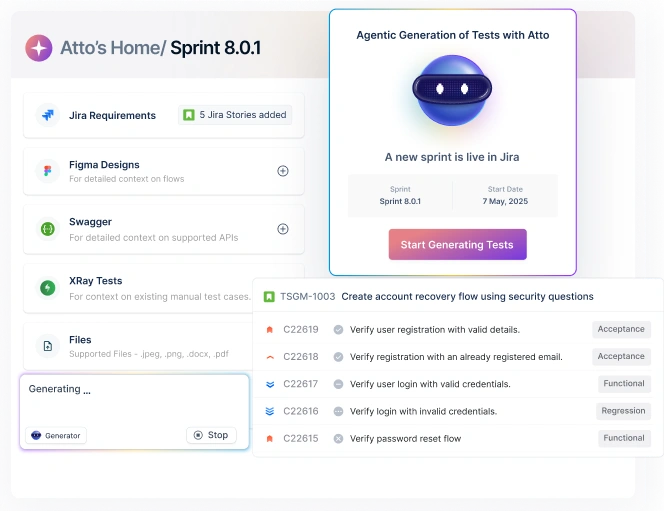
The most significant part of Testsigma is Atto, an AI coworker. Atto can look at your Jira stories to plan tests, write the test steps for you, and even heal tests if an ID changes.
- AI-Agentic Automation: The Atto AI coworker handles the heavy lifting, from planning your test cases based on Jira stories to automatically healing broken scripts. This reduces your maintenance time by up to 90%.
- Unified Testing Lab: You get a single, cloud-native platform that covers web, mobile, API, and even legacy systems like Salesforce. Users on Gartner Peer Insights frequently praise the unified lab for its ease of use across different device types.
- Built-in Efficiency: Because it’s a low-code platform, you don’t need a team of specialized SDETs to manage it.
BrowserStack: The Infrastructure Giant

BrowserStack can be a great alternative if your primary concern is testing on every possible device and browser combination.
- Massive Infrastructure: It provides instant access to thousands of real iOS and Android devices, which is critical for catching bugs that only appear on specific hardware. Many users on Capterra cite its reliability for cross-browser testing as its biggest strength.
- Seamless Integration: It’s a drop-in replacement for teams already using Selenium, Playwright, or Cypress.
- Visual Testing with Percy: Its integration enables automated visual reviews, catching pixel-perfect UI bugs that functional tests might miss.
However, teams sometimes find pricing climbs quickly as parallel usage increases, and the sheer number of options can feel overwhelming for smaller setups.
LambdaTest (testmu AI): The Speed and Value Innovator

LambdaTest can be an addition to your agile team for its HyperExecute technology that runs tests at the network edge, cutting your execution time by more than half.
- Hyper-Fast Orchestration: By eliminating the latency between the test runner and the browser, HyperExecute prevents your CI/CD pipeline from backing up.
- Kane AI Assistant: Their new AI agent, Kane AI, helps generate and debug tests using natural language, similar to how modern developers use AI to write code.
- Transparent Pricing: It offers a very competitive pricing model that appeals to startups and mid-market companies.
While it excels in speed and affordability, its device coverage and enterprise-level depth may not always match platforms like Testsigma, especially at scale.
Sauce Labs: The Governance Expert
Sauce Labs is a mature platform that prioritizes test observability. It is built for organizations that need to see long-term quality trends and deep historical data.
- Advanced AI Insights: Their AI-driven analytics tool identifies the root causes of failures across millions of data points, helping you spot patterns rather than just individual bugs.
- Enterprise Governance: With SOC2 Type II and ISO 27001 certifications, it is highly trusted by regulated industries like banking and healthcare.
- First-Party Mobile Support: It has deep support for native mobile frameworks like Espresso and XCUITest, offering more stability for mobile app testing than standard wrappers. Capterra reviewers often highlight its detailed reporting and video logs as key benefits.
This enterprise-grade power often comes with added complexity and cost, which can make it less approachable for smaller teams or fast-moving startups.
Ranorex Studio: The Hybrid Specialist

Ranorex Studio is unique because it supports modern web and mobile apps alongside legacy desktop software (such as Windows apps).
It’s perfect for companies with a hybrid tech stack that don’t want to buy separate tools for every department.
- Robust Object Recognition: Its RanoreXPath technology is great for finding UI elements in complex applications where other tools fail.
- On-Premises Flexibility: Unlike many cloud-only tools, Ranorex can run entirely on your own servers. This is a mandatory requirement for many government and defense organizations that cannot use public clouds.
- Codeless + Code: It offers a great best of both worlds approach with a powerful record-and-playback tool for beginners and a full C# IDE for advanced engineers.
Compared to newer cloud-native tools, Ranorex can feel less lightweight and may require a steeper setup and learning curve.
CloudQA: The Monitoring Bridge

CloudQA is a price-performance leader focused specifically on web applications. It’s designed to be simple and multi-purpose, allowing you to use a single test for multiple quality checks.
- Multi-Use Test Cases: A single functional test case can be reused for regression testing, load testing, and even ongoing site monitoring. This drastically reduces the effort needed to maintain different testing suites.
- Simple Recording: Its browser-based recorder is intuitive enough that even non-technical staff can build complex test flows. G2 reviews often mention how the friendly UI helps teams quickly achieve in-sprint automation.
- Consumption-Based Pricing: This model is perfect for teams that don’t need a dedicated grid 24/7 but want the ability to scale up for big releases.
However, its focus on web applications means it doesn’t offer the same breadth of mobile or enterprise-grade capabilities as more comprehensive platforms.
TestRigor: The Generative AI Powerhouse

testRigor is a leader in vision-based testing. Instead of looking at the HTML code (the “DOM”), it looks at the screen like a human does. If a button looks like a “Buy” button, testRigor will find it.
- Plain English Testing: You can write your tests entirely in English based on what you see on the screen. This eliminates the maintenance headache of updating IDs or CSS selectors every time the code changes.
- Complex Scenario Support: It easily handles tricky tasks such as 2FA codes, SMS verification, and phone call testing within your automated flows.
- End-to-End Coverage: It supports everything from web and mobile to mainframe applications, making it a powerful successor to tools like TestProject.
This abstraction layer can sometimes reduce fine-grained control, which advanced automation engineers may prefer when debugging highly specific issues.
Kobiton: The Mobile-First Responsive Cloud

Kobiton is the specialist for mobile-first companies. While other tools treat mobile as an add-on, Kobiton builds everything around the mobile user experience.
- Ultra-Low Latency: It supports up to 30 frames per second, which makes remote manual testing feel as fast as having the phone in your hand. This is critical for high-precision UX and game testing.
- Appium Turbo: This feature optimizes how Appium scripts run on their cloud, making them execute significantly faster than on standard grids.
- Flexible Deployment: You can use their public cloud, a private cloud just for your team, or even hook up your own on-desk devices to their management console. Gartner Peer Insights users often praise this flexibility for managing fragmented Android devices.
However, its strong mobile focus means it’s not as well-rounded for teams needing equally robust web or cross-platform testing capabilities.
How to Choose the Right Perfecto Alternative for Your Team
Choosing from the available Perfecto alternatives depends on where your current process is breaking down. Ask yourself these three questions to find out:
Is Your Team Spending More Time Fixing Tests Than Writing New Ones?
If manual maintenance is your biggest burden, you should prioritize an AI-driven platform.
Testsigma uses AI to automatically heal tests when elements change, which is a significant upgrade over the manual script management often required in Perfecto.
Does Your Testing Budget Allow You to Scale Alongside Your Product?
High license fees can prevent you from running the number of parallel tests you actually need.
Look for a tool with transparent, consumption-based pricing or a low-code model that lets your existing manual testers contribute, saving you from hiring expensive, specialized engineers.
Do You Need Every Niche Mobile Device OR Faster Feedback?
If you support a global audience on rare hardware, BrowserStack’s massive lab is your best bet.
However, most teams find that a high-speed, unified tool like Testsigma provides the quick results needed for modern CI/CD pipelines without the lag of a massive, distant cloud.
Conclusion: Making a Confident Decision
Switching away from a legacy tool like Perfecto to one of the leading Perfecto alternatives can be challenging, but it’s often the best way to help your team move faster. Whether you need the smart, AI-driven ease of Testsigma or the massive device lab of BrowserStack, there is a better way to test.
Choose a platform that empowers your entire team for more reliable software releases. Focus on building your product while the right technology aids you. Start your free trial of Testsigma to see the results now.
FAQ’s
Testsigma stands out with its NLP-based automation and AI agent that can generate, heal, and maintain tests with minimal manual effort. Compared to traditional platforms, it reduces ongoing maintenance while keeping test creation accessible to both technical and non-technical users.
Yes, many alternatives offer transparent pricing, usage-based plans, or lower entry tiers suited for startups. Tools that combine low-code automation with AI, such as Testsigma, can further reduce costs by minimizing long-term maintenance effort.
Most leading competitors provide enterprise-grade stability with reliable cloud infrastructure and parallel execution capabilities. Testsigma also improves stability by reducing flaky tests through self-healing and adaptive execution.
In many cases, migration is straightforward if your tests are built on frameworks like Selenium or Appium. Some modern platforms can even recreate or optimize tests using AI, reducing the need for complete rewrites.
Most alternatives now include AI capabilities such as natural-language test generation, self-healing scripts, predictive analytics, and visual validation. These features help reduce manual effort and improve test coverage over time.
Integration depth varies, with most tools supporting CI/CD pipelines and frameworks like Selenium, Jenkins, or GitHub Actions. Testsigma focuses on broad yet easy integrations to balance flexibility with ease of setup.