
#1 SALESFORCE TEST AUTOMATION
Automated tests
that survive frequent Salesforce UI changes.
AI agents generate plain-English Salesforce tests across Lightning and Classic.
Locate elements by metadata so dynamic IDs and Shadow DOM won’t break tests.
Cover Lightning and Classic, Flows, CPQ, and Experience Cloud in one place.
Know your critical Salesforce workflows still work before every go-live.
By signing up, you agree to our Privacy Policy.





















Switching to automated testing for Salesforce?
Pick your starting point
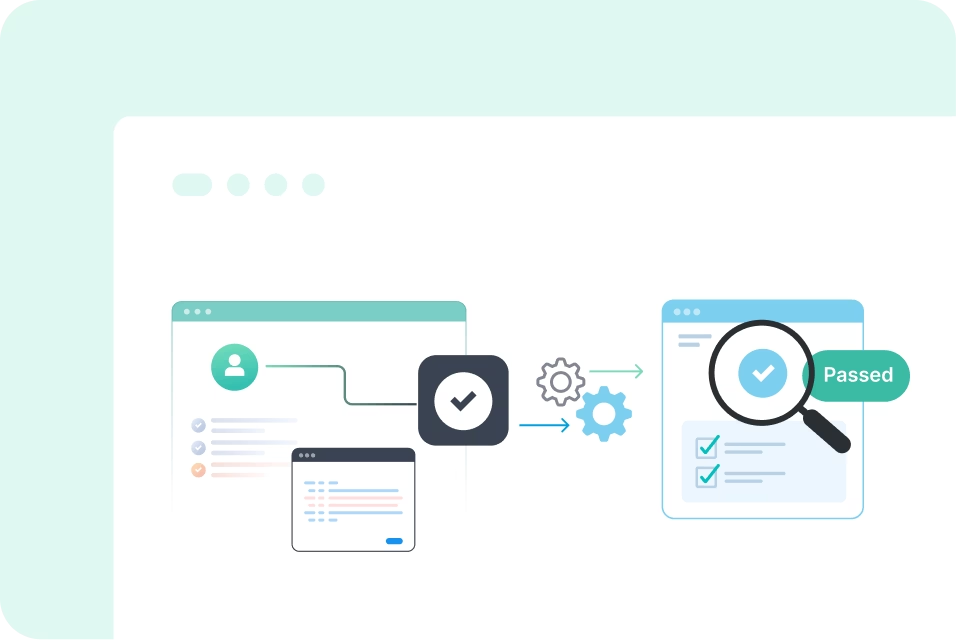
Coming from manual Salesforce testing?
Turn repeatable regression checks into automation quickly - without building a framework. Standardize reusable steps for Lightning and run them every release.
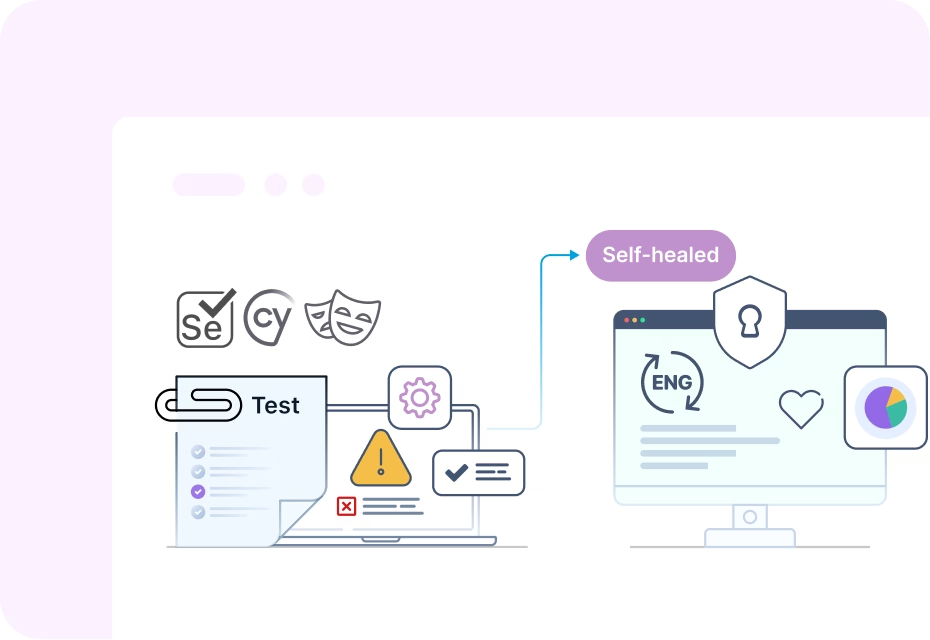
Replacing Selenium, Playwright, or Cypress?
Never spend another sprint cycle fixing brittle scripts. Move to plain-English tests with self-healing and built-in reporting, so maintenance doesn’t block coverage.
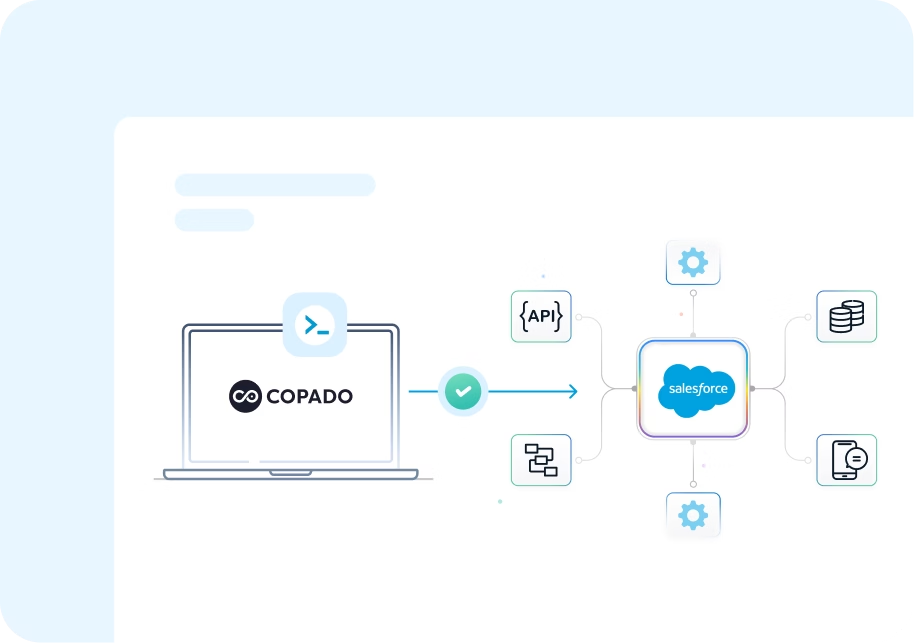
Moving from Provar/Copado or consolidating tools?
Keep Salesforce depth, then go beyond Salesforce. Test end-to-end workflows across apps, APIs, and data without stitching together execution grids and reporting.
Why choose Testsigma for Salesforce
test automation

Plain-English automation that scales beyond the QA team
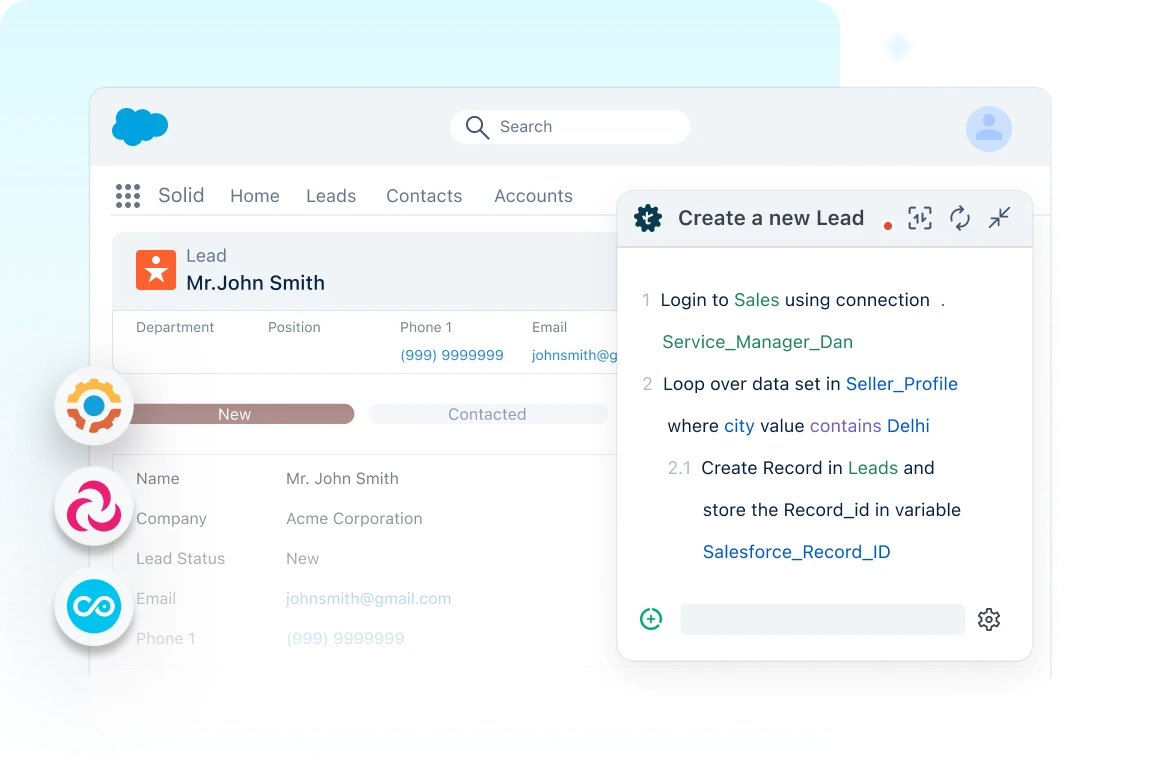
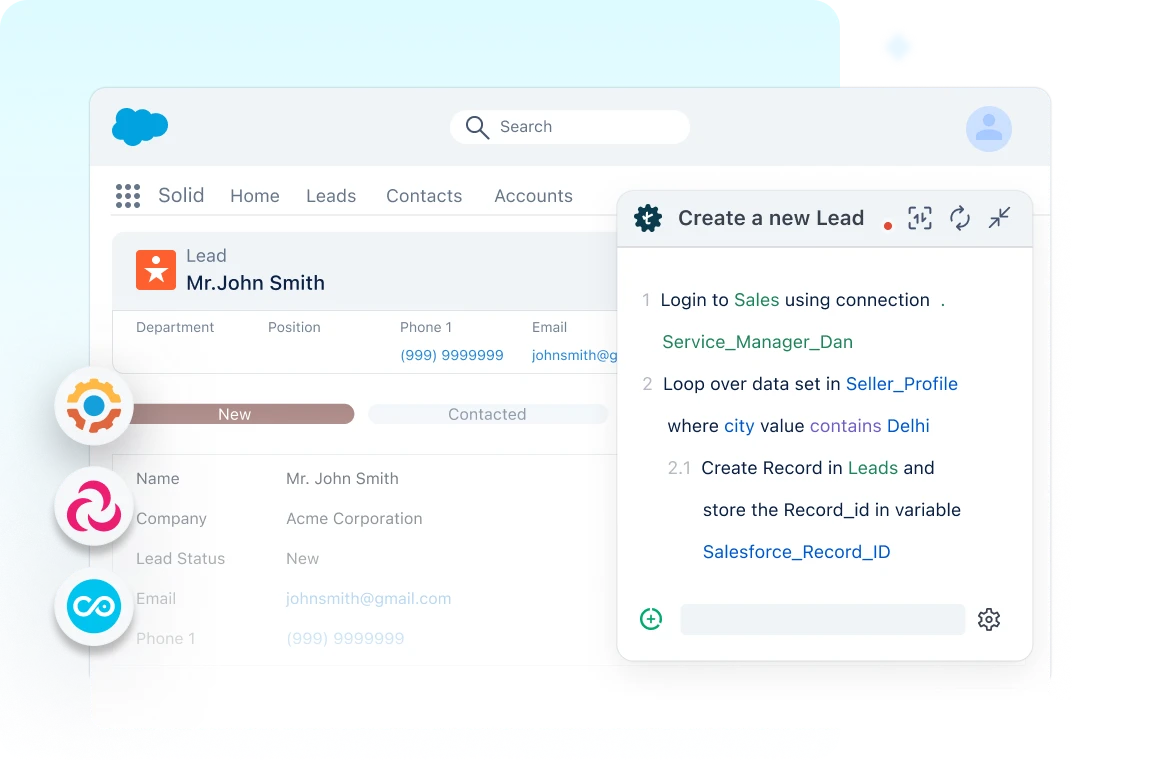
- Create Salesforce tests in plain English with reusable steps and parameters
- Admins, analysts, and QA collaborate on coverage
- Less dependency on engineering for every change

Self-healing and metadata-based locators, built for Lightning
- Metadata-based locators find the right element when Lightning’s IDs or Shadow DOM change
- Self-healing suggests fixes for your approval, keeping breakage low through updates
- Validate release readiness across sandboxes before go-live

One platform for Salesforce UI, API, and integration testing
- UI tests for Lightning + Classic, CPQ, Flows, Experience Cloud
- API + UI validation for real end-to-end confidence
- Unified execution and reporting (no toolchain sprawl)


“Frequent Salesforce updates used to break our tests. Now they don’t.”

Testsigma's intuitive UI and automation capabilities have significantly improved our testing efficiency. The ability to track element locator changes and auto-healing has been a game-changer in handling frequent Salesforce updates.
Amrutha Sireesh
Lead QAT Analyst | Crown Commercial Service, UK

The Complete Salesforce Quality Platform
- without the tool sprawl
End-to-End Coverage
Automate Salesforce workflows the way users actually work - from login to outcomes, across environments.
Execution at scale
Run suites in parallel across scratch orgs, sandboxes, and production - without managing infrastructure.
Unified reporting
Get one single source of truth for results, trends, and failures - without stitching together add-ons.
Built-in governance
Organize suites, standardize reusable steps, and keep release readiness visible to stakeholders.
Real outcomes from Salesforce teams –
including tools replaced
Salesforce buyers want proof from teams switching off the same things you’re using.
30-40% time savings vs Selenium

Reduced effort compared to Selenium: And when tests fail, fixes often take “half an hour or less.”
Replaced

Outcome
Less maintenance,
faster throughput
Replaced Playwright upkeep with plain-English tests

Moved away from high code maintenance so more of the team could contribute to automation.
Replaced

Outcome
Easier authoring,
lower maintenance


Technical capabilities that actually matter for Salesforce testing
Not just “can it click buttons” - but can it survive releases, scale execution, and validate real workflows.
Full Salesforce coverage for
real workflows
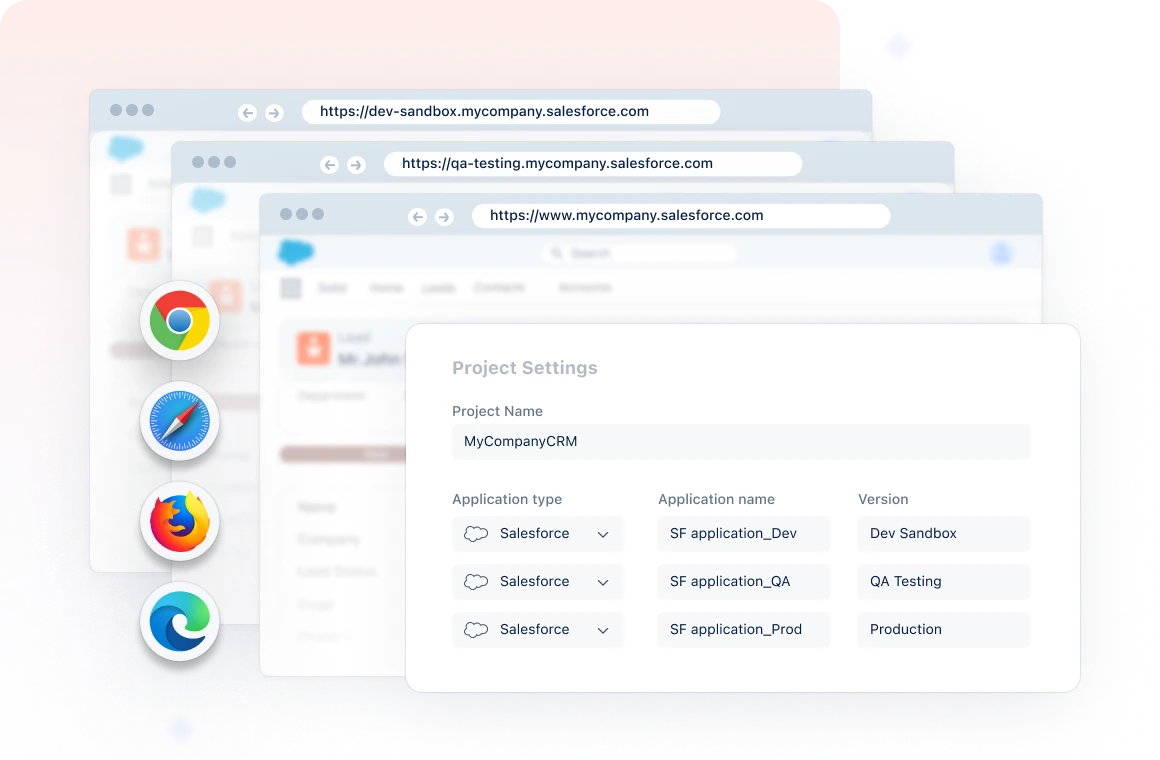
Automate the journeys your teams run every release - not just isolated clicks.
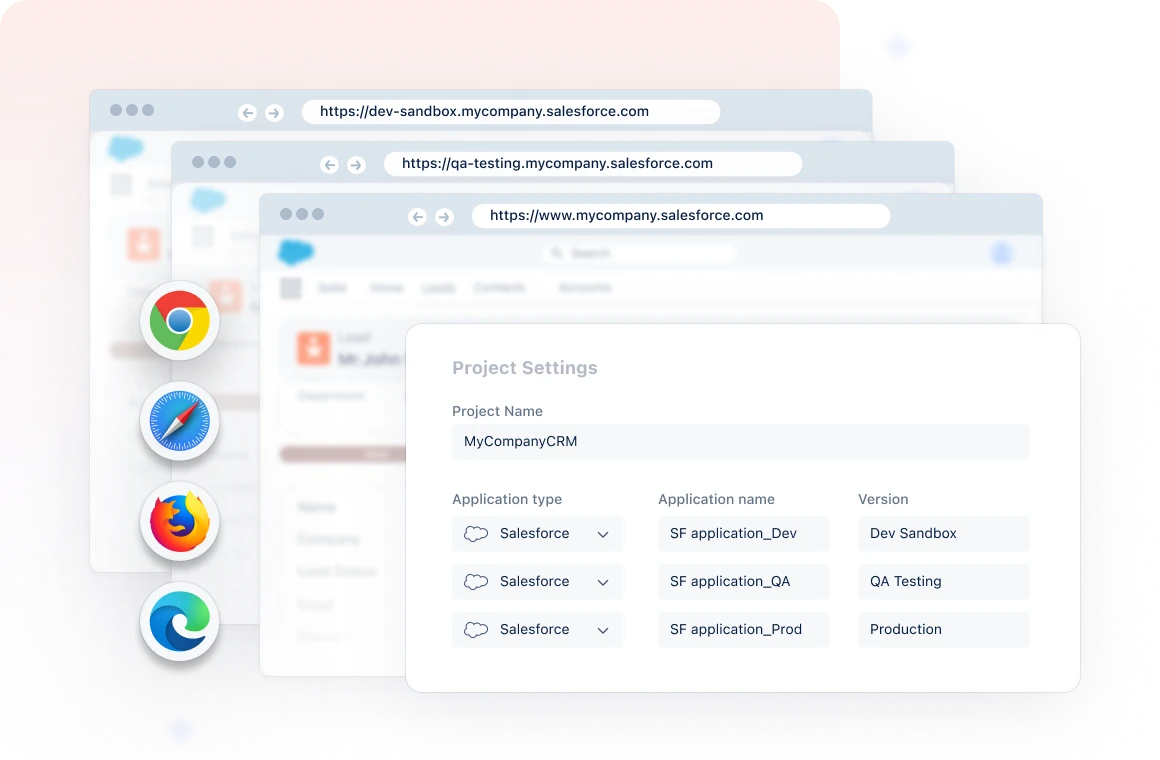
Lightning + Classic coverage for regression suites
Validate CPQ, Flows, and Experience Cloud workflows
Reusable steps to scale coverage without duplicating effort
CI/CD + environment readiness for Salesforce releases
Run the right suites in the right orgs automatically before every release goes live.
Execute across scratch orgs and sandboxes with consistent configuration
Trigger tests from your pipeline and gate releases on results
Centralized results and traceability for fast triage and auditability
Execution performance that keeps feedback loops short
Scale coverage without slowing releases or drowning in reruns.
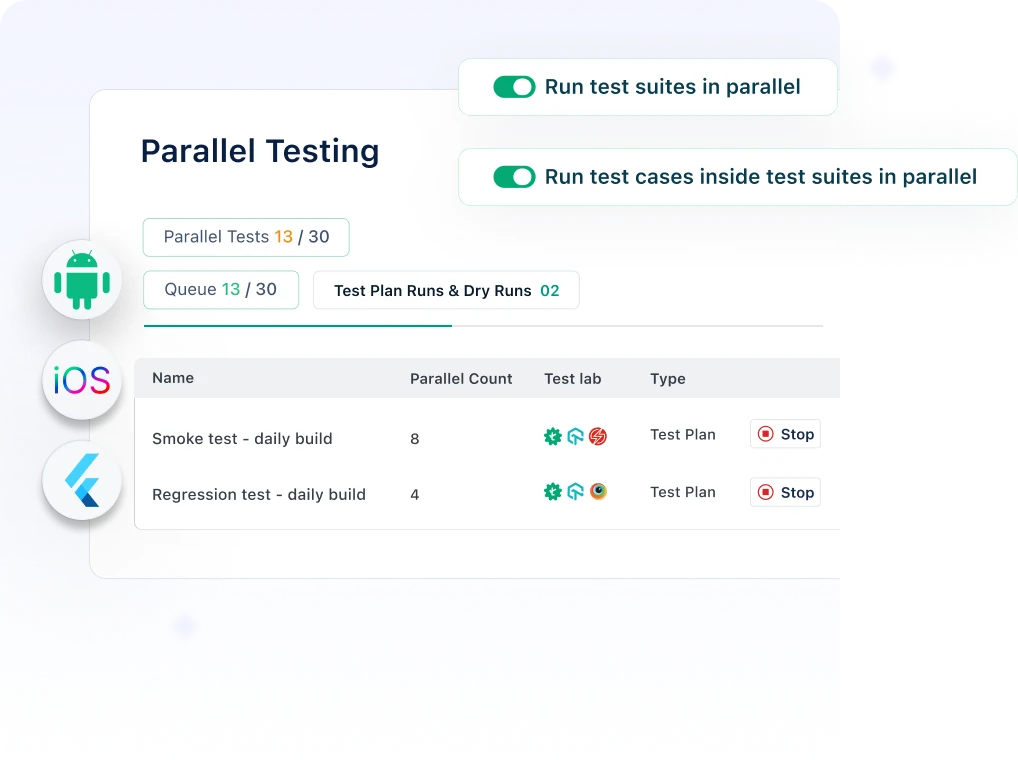
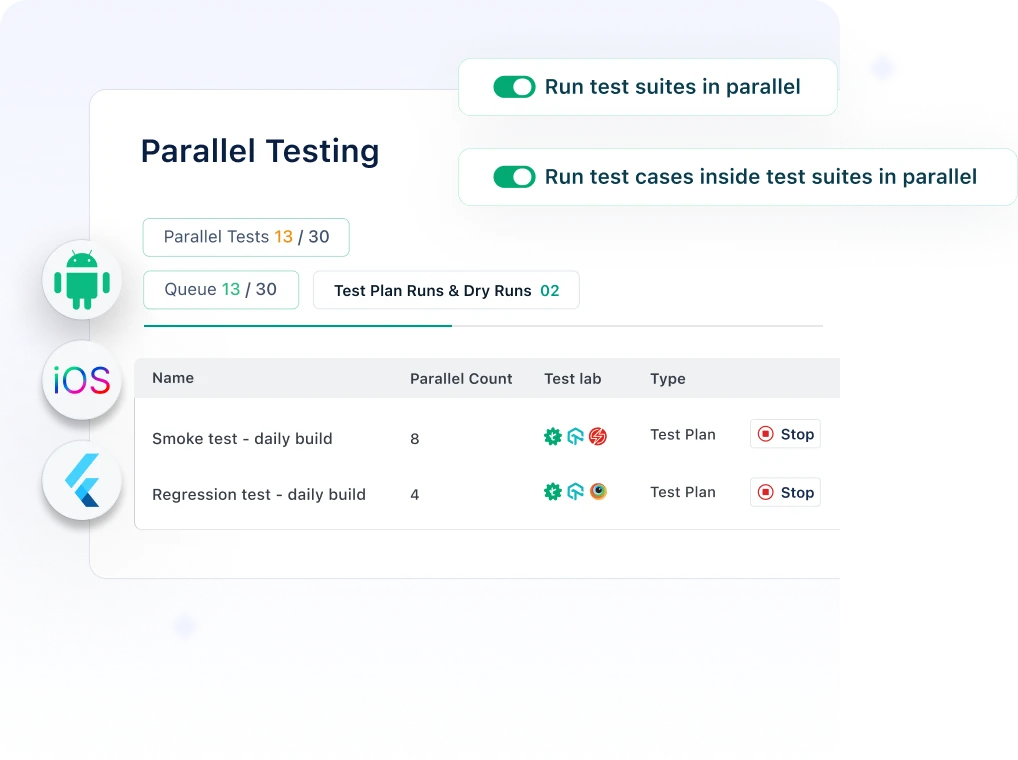
Parallel execution to cut suite runtime
Failure insights that reduce time-to-fix
Trends and reporting to spot repeat breakpoints early
Built for the three Salesforce testing
teams we see most
Salesforce admins + manual testers who need no-code
Move from checklists to automated testing in Salesforce without becoming a framework owner.
You'll see
Fast regressions, less dependency on engineering.
QA teams drowning in Selenium or Playwright maintenance
Replace brittle scripts with plain-English automation and self-healing so coverage grows without churn.
You'll see
More coverage, fewer "fix the suite" sprints.
QA leaders struggling to consolidate fragmented toolchains
Unify authoring, execution, reporting, and governance - so Salesforce quality doesn't require five tools.
You'll see
Lower total cost, cleaner ops, one source of truth.
Compare Testsigma based on what you’re replacing
What you’re
evaluating
Time to value + adoption
Maintenance + release resilience (Spring/Summer/Winter)
Salesforce coverage depth (Lightning/Classic + key areas)
End-to-end beyond Salesforce (apps, APIs, data)
Unified platform vs tool sprawl (UI + API + reporting)
Best fit

Fast to stable regressions. Plain-English tests. Admins + QA can contribute
Auto-healing + metadata sync. Fewer breaks after releases
Lightning + Classic. CPQ, Flows, Experience Cloud. Real workflows
Test Salesforce + rest of stack in one platform
UI + API in one place. Central results + trends
Switching from manual, frameworks, Provar, or stacks. Want stable automation + E2E confidence
Manual testing
Slow to scale. People-hours grow with scope
Every release = long retest cycles
Inconsistent coverage. Complex areas skipped
Mostly manual. Slow to validate integrations
Spreadsheets + tribal knowledge
Small suites. Low change frequency
Selenium / Playwright / Cypress
Setup + scripting time. Mostly engineers can maintain
High churn • Flaky runs • Frequent rewrites
Possible, but brittle at scale
Needs extra tools + glue code
Add-ons for grid/reporting. Split visibility
Teams that want full control + can fund maintenance
Salesforce-only tools (e.g., Provar)
Fast for Salesforce UI. Less flexible beyond Salesforce
Better for Salesforce UI • Still breaks across end-to-end flows
Strong Salesforce UI focus
Common gap beyond Salesforce
UI-first. Extra tools for APIs/reporting
Salesforce-only needs. Limited E2E
Fragmented stacks (framework + grid + reporting)
Slowest start. Glue work + multiple tools
Highest churn • Breaks ripple across tools
Depends on setup. Environment + flake issues
Broad coverage, heavy coordination
Always fragmented. Hard to correlate results
Teams willing to run a complex stack

See the Difference in 10 Days
Bring one real Salesforce regression flow. We’ll show you how it looks in Testsigma vs your current approach.

compliance, and recognition



Users love us

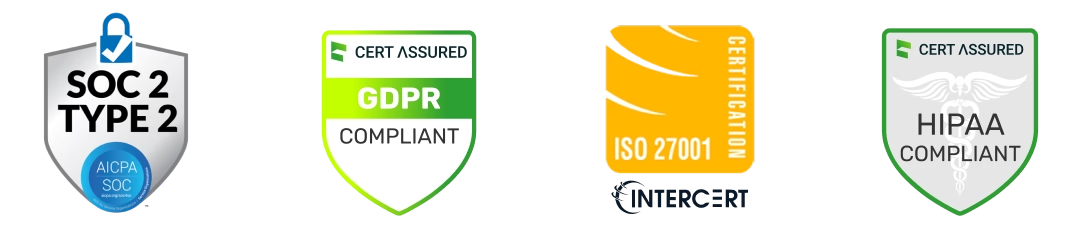
Enterprise-grade security
entire stack - in one platform
Salesforce quality doesn’t end at the login screen. Validate workflows that touch ERP,
finance, portals, and data tools - without stitching multiple testing tools together.
- Extensive support for Salesforce APIs to perform actions on Salesforce objects and validate data including SOQL support
- 30+ integrations with CI/CD, test management, and bug-tracking tools like Gearset, Flosum, AzureDevOps, and so on
- Support for custom REST API to integrate with any third-party system

Access your Salesforce testing playbook
Salesforce UI Testing: How to Automate With Testsigma
Yamini Priya
20 MAY 2023
Salesforce Regression Testing: Benefits and Best Practices
Yamini Priya
26 JUN 2023
Salesforce Test Cases Template with Best Practices
Yamini Priya
10 AUG 2023
Frequently Asked Questions

Start your Salesforce automated testing journey
with Testsigma today