- web apps
 Why Install Chrome Extension?
- Steps to Test Locally Hosted Apps
- How to Turnoff Onboading Tutorial?
- Non-Text Keys in Test Cases
- Basic Authentication for Web
- Why Bypass CAPTCHA?
- Test Case Failures Due to Link Text Capture Issues
- Why Is a Single Video for All Test Cases in a Test Plan Unavailable in Some Cases?
- How to Handle Browser-Related Permission Issues?
- Why Can’t Selenium ChromeDriver Interact With 3DS Authentication Pages?
- What Should I Do If My Browser Blocks Local Network Access?
- Why Am I Getting an Error While Registering the Agent?
- Why Does the Try Again Error Appear While Installing the Testsigma Agent in a Proxy Environment?
- How to Enable IE Mode in Microsoft Edge?
- mobile apps
- Apple Pay Automation with Testsigma
- How do I Enhance the Execution Speed for Mobile Native Apps?
- Why am I Facing Permission Error During Local Test Execution?
- How to Resolve App Launch Issues?
- Why does the iOS App Close Right After Opening in Testsigma?
- How to Execute Android/iOS Tests in Emulators/Simulators?
- Why Does Scroll to Element Fail in Mobile Native Apps and How Do I Fix It??
- FAQs on Unified Mobile
- general
- Why am I Unable to Download the XLS File from the Edge Browser?
- How to Handle Browser-Related Pop-Up Issues?
- How to Handle Text-Based CAPTCHA in Testsigma?
- Why does Test Execution Fail with the Error No Route to Host?
- Why do Errors Occur When I Try to Download Files from The Exports Page?
- How to Test Flutter Apps Using Accessibility Mode?
- How to Add Multiple Runtime Variables in Data Generator Functions?
- How to Insert Test Data in RAW Body for POST API?
- What is Chrome for Testing and How Does it Work?
- How Can I Set Up Authenticator-Based Authentication in Testsigma?
- How to Update an Excel File in Testsigma Uploads?
- What Causes Longer Automation Test Execution Times in a Test Plan?
- How Do I Retrieve the OTP When it’s Embedded within HTML Tags?
- How to Configure the OracleDB Add-on in Testsigma?
- FAQs on Classic & Modern Engines
Why Does Scroll to Element Fail in Mobile Native Apps and How Do I Fix It??
In mobile native apps, the Scroll to Element NLP only works when the target element is already rendered within the current screen viewport. If the element exists on the page but hasn't scrolled into view yet, the NLP has no visible target to act on, causing the step to fail silently or do nothing. This article discusses how to resolve this by using a Swipe NLP before Scroll to Element to manually bring the element into the viewport first.
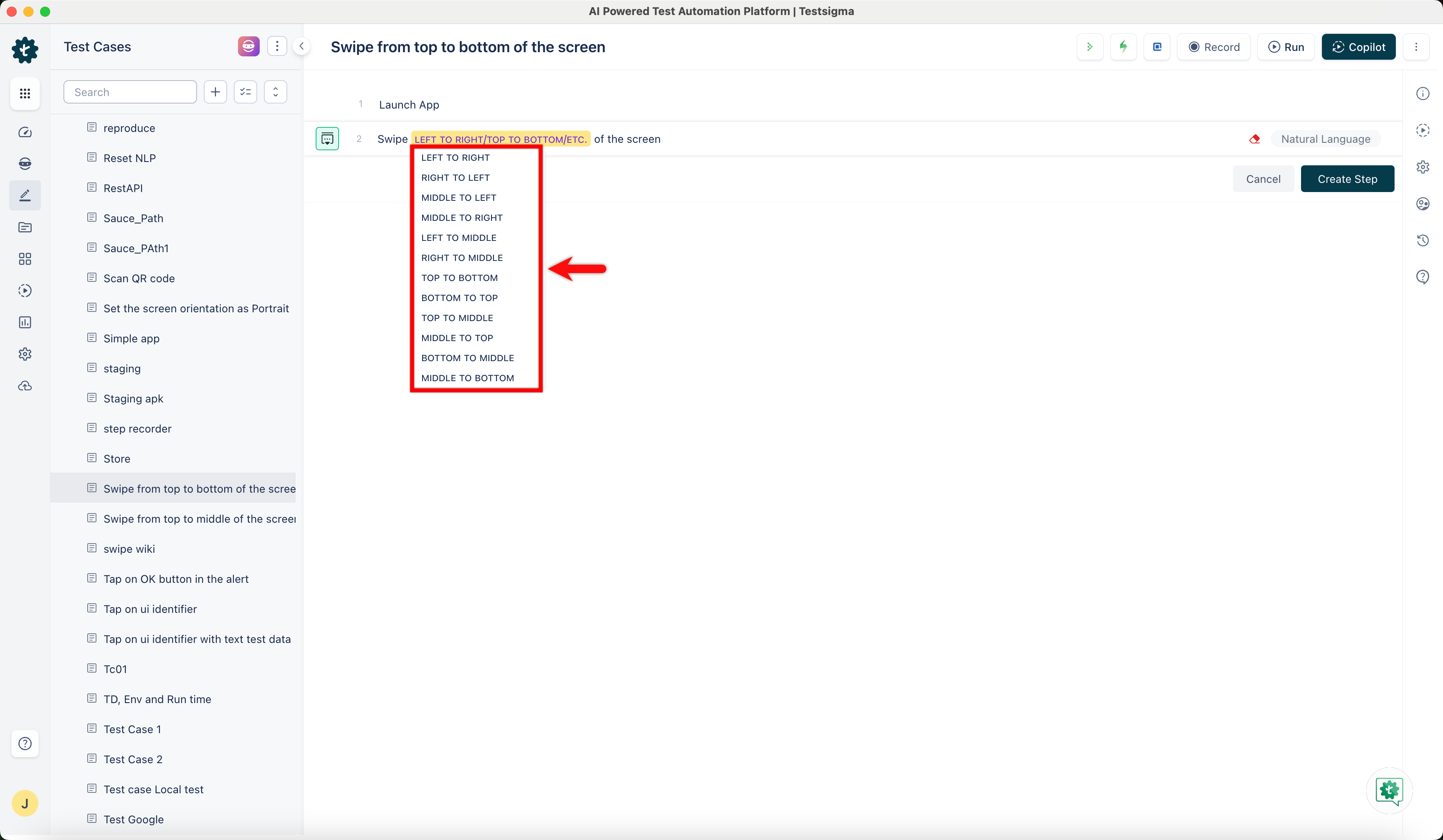
Swipe NLPs to Use Before Scroll to Element
Use one of the following Swipe NLPs depending on which direction you need to scroll:
| NLP | Effect |
|---|---|
| Swipe from middle to top on the screen | Scrolls the screen upward, reveals content below the current view |
| Swipe from bottom to top on the screen | A more aggressive scroll, reveals content further below |
| Swipe from top to bottom on the screen | Scrolls back upward, use if you've scrolled past the element |
Steps to Use Swipe NLPs
- Open your test case and navigate to the step where you want to interact with an off-screen element.
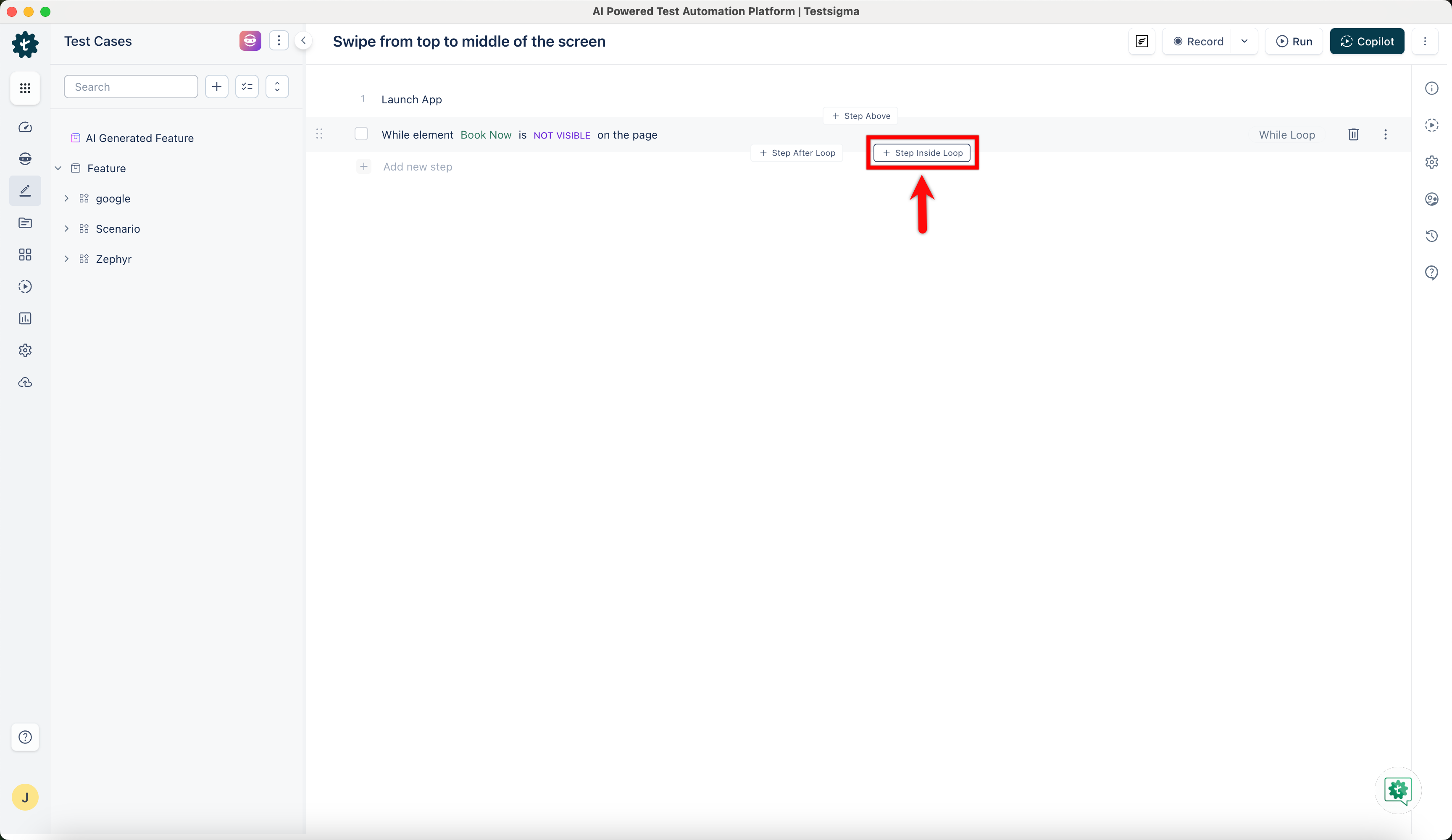
- If you are unsure about how many scrolls are required to view the element, then use the While loop to scroll through the page.
- Click Step Inside Loop to add a step inside the loop.
- Enter the Swipe NLP in the step action field.
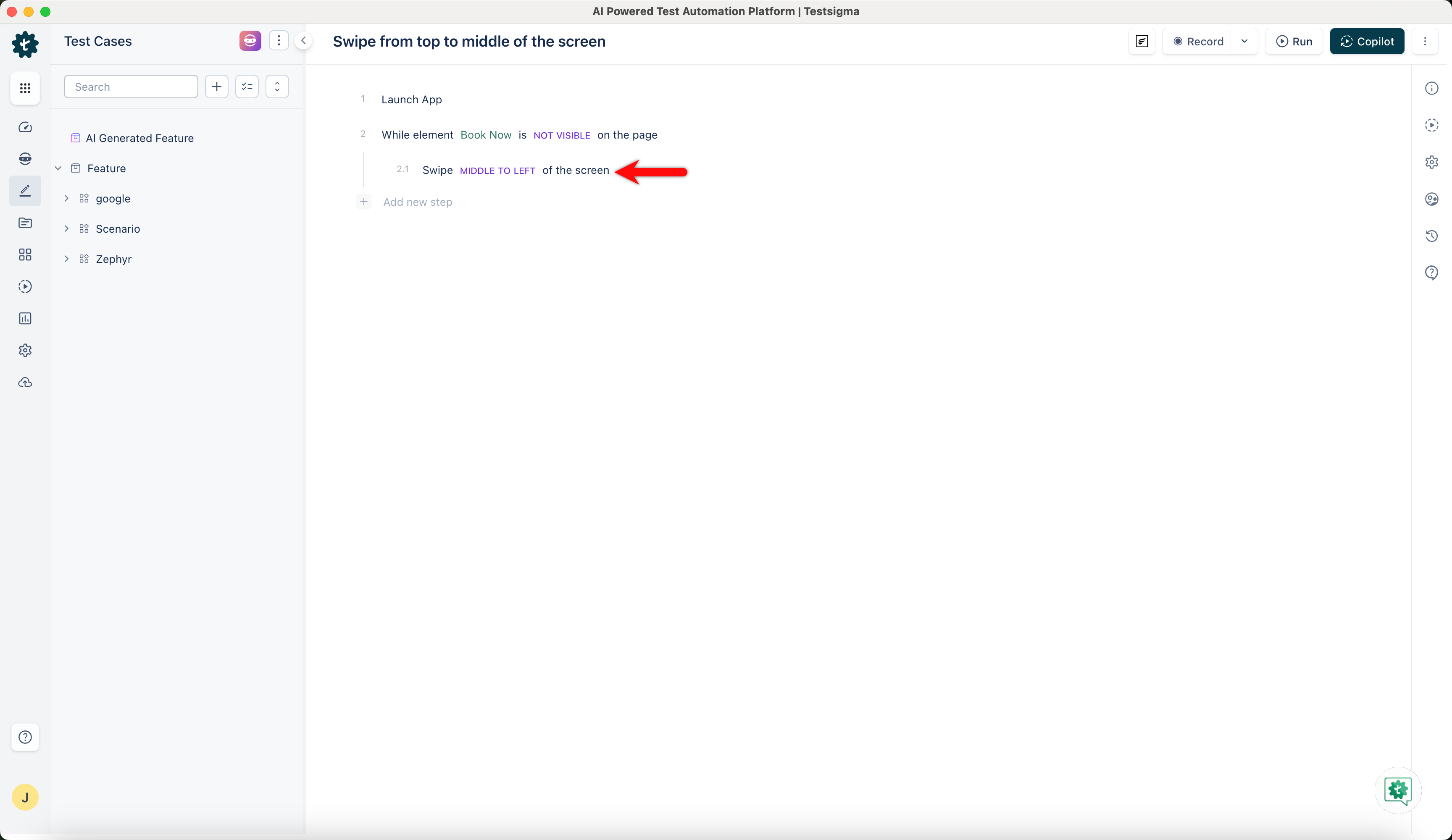
- If needed, add additional swipe steps to move the element further into view.
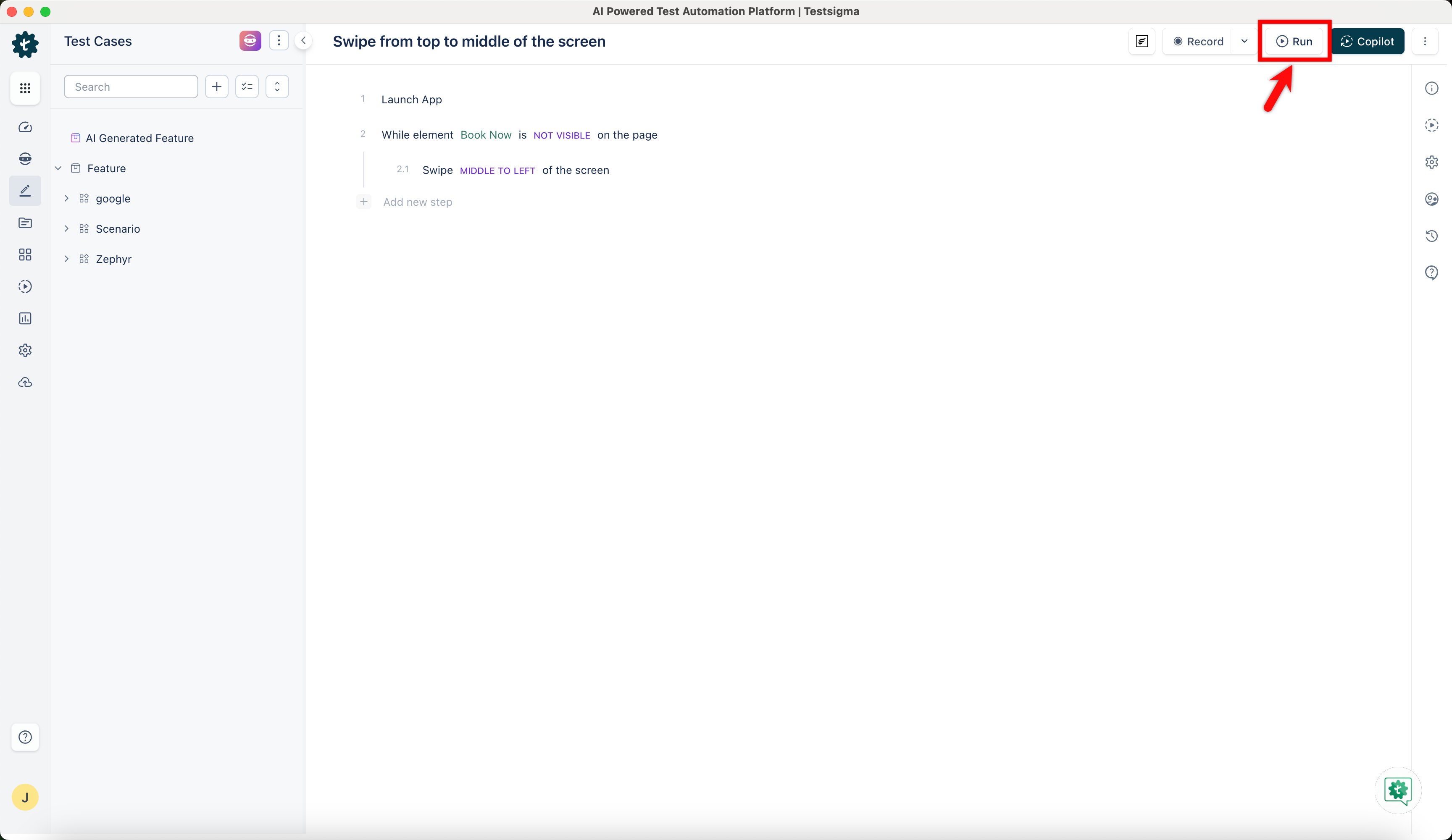
- Click Run to execute the test case and verify that the element comes into view before the scroll action.

Want to contribute or report missing content?