




Table Of Contents
- 1 Overview
- 2 What is a Software Release Life Cycle (SRLC)?
- 3 The Importance of a Reliable Software Release Cycle
- 4 6 Key Stages of the Software Release Life Cycle
- 5 Software Release Life Cycle vs. Software Product Life Cycle
- 6 Common Challenges in Software Release Cycles
- 7 5 Best Practices for Efficient Software Release Lifecycle Management
- 8 How to Accelerate the SRLC with Testsigma
- 9 Real-World Example: Fast-Tracking Releases with Testsigma
- 10 Ensuring Continuity in Your Release Cycle
- 11 FAQs on SRLC
Overview
The Software Release Life Cycle (SRLC) outlines how software progresses from early development to public deployment through structured, test-ready stages.
Why SRLC matters:
- Ensures predictable, high-quality releases
- Reduces risks and production failures
- Improves collaboration across teams
- Supports continuous testing and faster delivery
Key SRLC stages:
- Pre-Alpha
- Alpha
- Beta
- Release Candidate
- General Availability
- Production & Maintenance
The Software Release Life Cycle (SRLC) evolves through stages like pre-alpha, alpha, beta, and production, shaping how software matures from concept to public launch. With automation and CI/CD at the core, Testsigma modernizes this entire journey by accelerating testing, stabilizing pipelines, and ensuring faster, higher-quality releases.
What is a Software Release Life Cycle (SRLC)?
The Software Release Life Cycle (SRLC) is the structured framework that guides software from its earliest concept to its public availability. It defines how teams build, test, refine, and ultimately ship stable versions.
Standard stages include Pre-Alpha, Alpha, Beta, Release Candidate, and Production, as documented across industry references such as CPOClub and Wikipedia.
Faster iteration equals faster innovation; especially when automation reduces delays between stages. With continuous feedback, automated tests, and integrated workflows, teams can move through the SRLC with fewer bottlenecks and higher confidence in release stability.
The Importance of a Reliable Software Release Cycle
In fast-moving development environments, teams need a predictable way to ship updates without slowing down innovation. That’s where a well-designed software release cycle becomes essential: it creates order, clarity, and confidence across every build, test, and deployment stage.
A strong release cycle helps teams:
- Deliver features faster by reducing delays between development, testing, and deployment
- Maintain reliability even as release frequency increases
- Create consistent handoffs between engineering, QA, DevOps, and product
- Improve visibility through traceable, stage-wise progress
- Reduce risks by catching defects early through structured testing phases
The SRLC also acts as a backbone for software testing. With defined stages (Alpha, Beta, RC, and Production) teams know what to test, when to test, and how to prioritize quality checks.
Modern DevOps and CI/CD pipelines rely heavily on seamless release lifecycle management to ensure that code flows smoothly from commit to deployment. When the SRLC works in sync with automation, real-time insights, and continuous validation, software releases become more predictable, repeatable, and scalable.
This combination of speed and structure is what gives teams a competitive edge today: faster development cycles without compromising quality.
6 Key Stages of the Software Release Life Cycle
Below is a stage-wise breakdown optimized for featured snippets and search clarity.
Stage 1: Pre-Alpha Stage
Focus: This stage revolves around architecture design, core feature development, prototypes, and validating early assumptions. Teams experiment freely, explore ideas, and outline technical feasibility while shaping the fundamental structure of the product.
Aim: The goal is to refine concepts, resolve early technical uncertainties, and ensure the groundwork is strong enough for upcoming Alpha validations.
Stage 2: Alpha Stage
Focus: The Alpha stage introduces structured internal testing across usability, functionality, and stability. QA and developers work closely to uncover significant defects, verify core workflows, and ensure the build can withstand deeper examination.
Aim: The Alpha phase ensures critical issues are resolved before exposing the product to external testers, setting the stage for a smoother Beta experience.
Stage 3: Beta Stage
Focus: Beta involves releasing the software to a limited group of real users, either through closed testing or open enrollment. This stage focuses on understanding real-world behavior, identifying UX concerns, and capturing performance patterns that internal testing might miss.
Aim: To gather authentic user feedback and validate how the product performs outside controlled environments. Insights collected here help refine features, resolve edge cases, and prepare the software for general availability.
Stage 4: Release Candidate (RC) Stage
Focus: The RC stage presents a nearly final build that requires only essential fixes. Teams perform final stability checks, polish workflows, and verify compatibility across systems to ensure the product behaves consistently in all target environments.
Aim: To complete UAT, eliminate high-severity bugs, and ensure there are no blockers preventing launch. This stage confirms whether the build can confidently move to General Availability.
Stage 5: General Availability (Ga)
Focus: GA marks the formal public release, supported by updated documentation, marketing initiatives, onboarding materials, and deployment activities.
Aim: To deliver a polished, stable version to the market and initiate adoption at scale. GA becomes the baseline for future patches, minor updates, and feature enhancements.
Stage 6: Production and Maintenance Stage
Focus: Once in production, the software undergoes continuous monitoring, performance tracking, and incident management. Teams work on hotfixes, security patches, and regular version updates to maintain operational stability.
Aim: To ensure long-term reliability, security, and user satisfaction. This stage keeps the software aligned with evolving needs through iterative improvements, feedback-driven enhancements, and continuous lifecycle support.
Software Release Life Cycle Vs. Software Product Life Cycle
While they may sound similar, both serve different strategic goals:
| Category | Software Release Life Cycle (SRLC) | Software Product Life Cycle (SPLC) |
| Primary Focus | Ensures each version is tested, stable, and ready for deployment. | Oversees the product from idea to retirement, including growth, revenue, and strategy. |
| Timeframe | Short cycles: weeks to a few months, depending on release frequency. | Long cycles: often years, covering the product’s entire market journey. |
| Ownership | Led by DevOps, QA, and engineering teams responsible for quality and delivery. | Led by product managers, business leaders, and executives shaping long-term direction. |
| Key Outcome | A production-ready version pushed to users. | A continuously evolving product roadmap influenced by user needs and market shifts. |
| Scope | Tactical-focused on code changes, testing, and deployment. | Strategic-focused on positioning, customer value, and lifecycle profitability. |
The table makes the difference clearer: the software product life cycle governs long-term planning, the SRLC ensures smooth and reliable execution at every release stage.
Common Challenges in Software Release Cycles
Even mature teams struggle with SRLC-related bottlenecks such as:
- Unclear ownership and fragmented communication: When responsibilities aren’t well-defined, tasks slip between teams, leading to missed deadlines, duplicated work, and confusion about who approves what at each stage of the SRLC.
- Manual testing delays and traceability gaps: Manual execution stretches testing windows and often leaves teams with incomplete test histories. This makes it harder to track what was tested, what failed, and which changes introduced new bugs.
- Poor integration between dev and QA environments: Differences in configurations, data sets, or tools create inconsistent results. Builds may pass in development but fail in QA or staging simply because the environments don’t mirror each other.
- Inconsistent post-release feedback loops: Teams may ship updates quickly but struggle to capture structured feedback from users, support, or monitoring tools. Without clear insights, subsequent releases become reactive rather than improvement-driven.
For deeper guidance on overcoming these roadblocks, learn test management and top test automation best practices to follow for practical workflows that teams can instantly implement.
5 Best Practices for Efficient Software Release Lifecycle Management
Efficient release lifecycle management requires a balance of process clarity and automation acceleration. Key best practices include:
1. Implement Continuous Integration and Deployment Pipelines
CI/CD ensures that every code change is automatically built, tested, and deployed. This reduces integration conflicts, shortens release cycles, and keeps teams aligned around smaller, more manageable updates.
2. Standardize Pre-Release Testing Checklists
A clear checklist prevents critical steps from being missed—whether it’s regression coverage, security tests, environment validation, or user acceptance criteria. Standardization removes ambiguity and strengthens consistency across releases.
3. Maintain a Single Source of Truth for Release Documentation
Centralizing release notes, test reports, decisions, and ownership details keeps everyone aligned. A unified repository helps teams track version history, reduces duplications, and simplifies audits or handovers.
4. Automate Test Execution across Environments
Running automated tests on web, mobile, and API layers ensures predictable quality across SRLC stages. Automation eliminates manual delays and provides faster validation across dev, QA, staging, and pre-production.
5. Integrate Real-Time Analytics to Identify Regressions Early
Performance dashboards, error monitoring, and trend analysis help teams detect issues long before they reach production. Early insights make each release more stable and reduce firefighting in later stages.
These practices make SRLC predictable and scalable, especially when paired with the right automation platform.
| Why SRLC Speed Matters Beyond Deployment? When speed pairs with structure, every stage benefits. Structured SRLC → reduced risk of performance regressions Shorter release loops → quicker detection of defects Frequent code validation → fewer integration conflicts Smaller incremental changes → easier debugging and lower rollback impact Continuous testing alignment → higher confidence before GA Predictable release cadence → smoother cross-team coordination Faster feedback cycles → better prioritization for future versions |
How to Accelerate the SRLC with Testsigma
A modern SRLC needs speed without sacrificing stability. Testsigma enables teams to achieve both by automating workflows across every stage of the release pipeline. Here’s how:
1. Automate Testing across Release Pipelines
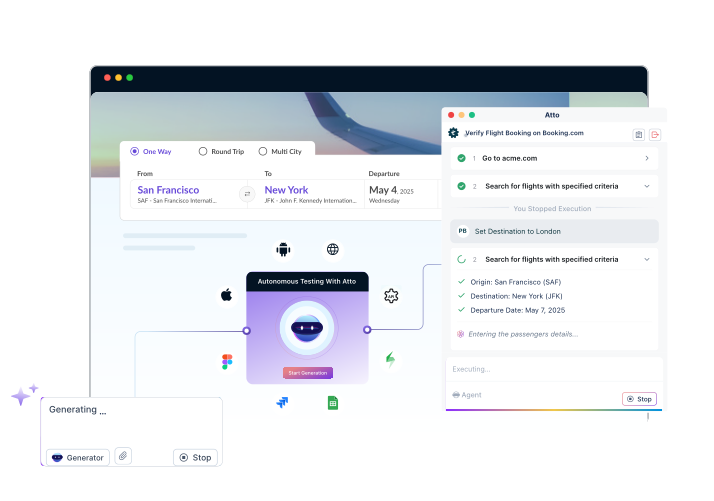
What it does: Expands test coverage across web, mobile, and API workflows so every SRLC stage (Alpha, Beta, and UAT) moves forward with validated, stable builds.
How it helps: Runs end-to-end automated tests across environments, reducing manual effort and ensuring consistent quality throughout the release pipeline.
2. GenAI Test Case Generation
What it does: Speeds up early-stage SRLC preparation by reducing the time spent writing test cases manually.
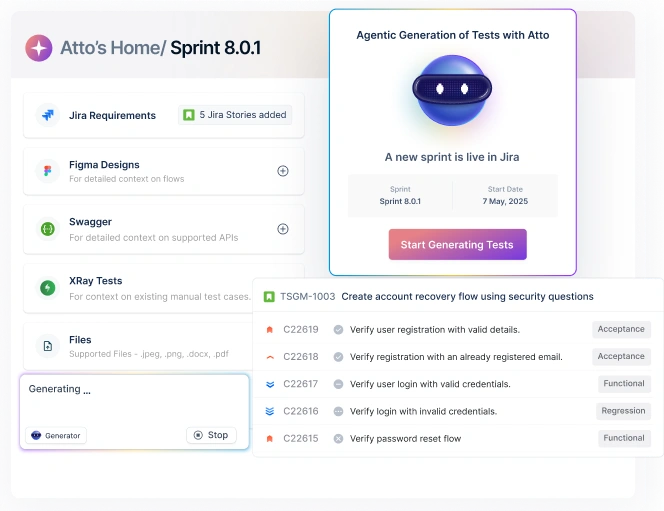
How it helps: Generates test cases instantly from simple English prompts using Testsigma’s GenAI Assistant.
3. Auto-Healing for Stable Pipelines
What it does: Prevents pipeline slowdowns by minimizing test flakiness and reducing unexpected failures in RC and pre-production stages.
How it helps: Automatically detects and fixes broken locators, cutting maintenance effort by up to 70% through AI-driven auto-healing.
4. Continuous Testing in CI/CD
What it does: Ensures faster, more reliable release cycles with immediate feedback on every code change.
How it helps: Integrates with Jenkins, GitHub, GitLab, and other CI/CD tools to trigger automated tests on each commit or deployment.
5. Real Device Cloud
What it does: Improves confidence ahead of GA by validating performance and usability on real-world devices.
How it helps: Provides access to thousands of real browsers and devices, eliminating post-release surprises and environment-specific issues.
Testsigma supports blue-green deployment testing; reducing rollback risks and ensuring stable transitions between production versions.
Real-World Example: Fast-Tracking Releases with Testsigma
A mid-size SaaS company struggling with long release timelines and frequent post-release fixes revamped its SRLC using Testsigma.
Their teams integrated the platform across development, QA, and staging pipelines to unify workflows and eliminate manual bottlenecks.
Within just three months, the results were clear:
- 60% reduction in release testing time, thanks to automated regression suites running across environments
- 45% fewer post-deployment bugs, driven by better coverage and early detection of failures
- 30% shorter software release cycle duration, enabling faster feature rollout and customer responsiveness
By automating repetitive tests, triggering runs directly from CI pipelines, and expanding coverage on real devices and browsers, the company shifted from monthly releases to reliable weekly deployments. The change didn’t just speed up delivery; it improved confidence across engineering, product, and customer teams.
Ensuring Continuity in Your Release Cycle
Mastering the software release life cycle directly influences time-to-market, product quality, and customer satisfaction. When teams pair structured release stages with automation, they achieve continuous quality through continuous delivery.
Testsigma accelerates every phase – from Pre-Alpha to Production – giving teams faster releases, fewer bugs, and more predictable outcomes.
FAQs on SRLC
Not always. Mature teams with strong automation may skip stages or shorten them, especially for minor or patch releases. Critical or large updates usually follow the full cycle.
They typically rely on UAT results, regression stability, defect severity, and performance benchmarks. A build moves to GA only when all high-risk issues are resolved.
SRLC applies to all software models, including SaaS. The difference is that SaaS teams cycle through stages more frequently due to continuous delivery and shorter iteration loops.