

Prompt Templates for Pro-level test cases
Get prompt-engineered templates that turn requirements into structured test cases, edge cases, and negatives fast every time.
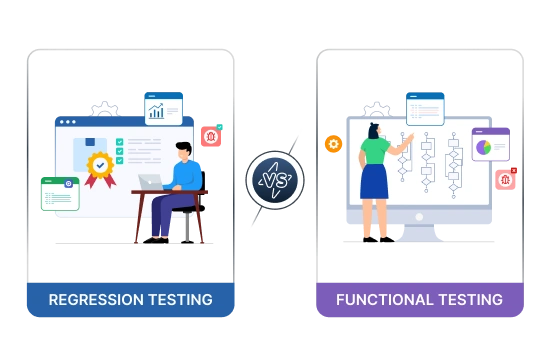
Table Of Contents
- 1 Overview
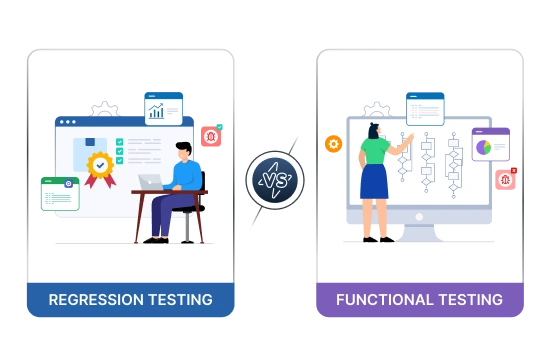
- 2 Functional vs Regression Testing: What Are They?
- 3 Regression Testing vs Functional Testing: Key Differences
- 4 When to Use Functional Testing vs Regression Testing in Software QA
- 5 Real-World Examples: Functional Testing and Regression Testing Scenarios
- 6 Best Practices for Functional and Regression Testing
- 7 Advantages of Functional and Regression Testing
- 8 Limitations of Functional and Regression Testing
- 9 Common Misconceptions and Mistakes in Functional vs Regression Testing
- 10 Conclusion
- 11 Frequently Asked Questions
Overview
What is Functional Testing?
Functional testing is a type of software testing that verifies whether each feature of an application works according to specified business requirements. It focuses on validating user actions, inputs, and expected outputs to ensure the system performs as intended. Functional testing typically includes unit, integration, system, and acceptance testing, helping teams confirm that every function aligns with user expectations and delivers the desired results.
What is Regression Testing?
Regression testing ensures that recent code changes, bug fixes, or feature updates haven’t negatively affected existing functionality. It involves re-running previously validated tests to detect new defects introduced by modifications. In CI/CD pipelines, regression testing is essential for maintaining product stability, catching hidden issues early, and ensuring a smooth user experience across builds.
Key Differences Between Functional and Regression Testing
- Functional Testing: Validates new or updated functionality against requirements to confirm it behaves as expected.
- Regression Testing: Rechecks existing features after changes to confirm the overall application remains stable.
In software quality assurance (QA), both functional testing and regression testing play critical roles in delivering reliable, high-performing applications. Though they share the common goal of ensuring quality, they differ in purpose, timing, and scope. Functional testing validates that each feature works according to requirements, while regression testing ensures that new updates haven’t broken existing functionality. Understanding the difference between functional and regression testing helps QA teams build efficient, risk-based testing strategies that save time and maintain software stability. In this article, we’ll explore regression testing vs functional testing in depth, like their differences, best practices, advantages, and how to apply each effectively within a modern CI/CD pipeline.
Functional Vs Regression Testing: What Are They?
Both functional testing and regression testing are essential parts of the software testing lifecycle, but they focus on different goals. While functional testing checks what the software is supposed to do, regression testing ensures that what already worked still works after changes. Let’s look at each in detail.
What is Functional Testing?
Functional testing validates that every feature of the application performs according to the defined requirements. Testers verify inputs, actions, and expected outputs, ensuring that each function behaves correctly from a user’s perspective. It focuses on what the system does, not how it does it. Examples include unit testing, integration testing, and user acceptance testing. The goal is to confirm that the product delivers the expected functionality without defects.
What is Regression Testing?
Regression testing checks whether recent code changes, updates, or bug fixes have unintentionally affected existing features. Even a small modification can disrupt core functionality, so regression tests re-run previously executed test cases to confirm system stability. It’s especially critical in continuous integration and delivery (CI/CD) environments, where frequent deployments demand quick, automated validation.
Regression Testing Vs Functional Testing: Key Differences
Both types of testing aim to deliver quality software, but they differ in purpose, timing, and focus. Here’s a clear comparison between functional testing and regression testing to help teams choose the right approach at the right stage.
| Aspect | Functional Testing | Regression Testing |
| Purpose | Validates that each feature works according to specified requirements. | Ensures new changes haven’t broken existing functionality. |
| When Performed | When a new feature or module is developed. | After code changes, bug fixes, or feature updates. |
| Focus Area | Verifying new or modified functionality. | Checking the stability of previously tested features. |
| Scope | Limited to specific features or functions. | Covers the entire system or impacted areas. |
| Test Basis | Requirements, specifications, and use cases. | Impact analysis, change logs, and past defects. |
| Test Cases | Designed to validate new functionality. | Reused from previous cycles to detect regressions. |
| Frequency | Performed during feature development or sprint cycles. | Conducted regularly in every build or release cycle. |
| Automation Suitability | Medium to high, depending on feature maturity. | Very high; ideal for automation in CI/CD pipelines. |
| Execution Time | Generally shorter and focused. | Longer; depends on the size of the regression suite. |
| Responsibility | QA engineers or developers testing new features. | QA team ensuring system-wide stability post-change. |
| Outcome | Confirms new functionality works correctly. | Confirms that updates haven’t caused any new issues. |
| Example | Testing a new login or search feature. | Re-testing login, search, and checkout after a UI update. |
When to Use Functional Testing Vs Regression Testing in Software QA
Choosing between functional testing and regression testing depends on your testing goals, project phase, and risk tolerance. Both serve different purposes in ensuring software quality. Functional testing verifies new functionality, while regression testing safeguards existing features against unintended side effects. The key is to balance both approaches strategically throughout your QA process.
Risk-Based Selection
In modern QA, testing should be driven by risk and impact, not routine.
Use functional testing when:
- You’re introducing a new feature, user flow, or integration.
- Business-critical requirements or acceptance criteria need validation.
- Early verification helps identify functional gaps or design mismatches.
Use regression testing when:
- Code changes could impact stable areas of the product.
- Fixes or updates in shared modules (like authentication or payment) might break dependent features.
- You’re preparing for a release and need to ensure overall stability.
By prioritizing based on risk and business impact, QA teams can maximize coverage without wasting effort on low-risk areas.
CI/CD Timing
In a continuous integration and delivery (CI/CD) environment, timing is everything.
- Functional tests are best executed on feature branches or during sprint cycles to validate new code quickly. They act as the first quality gate before merging changes.
- Regression tests should run automatically after each integration, nightly build, or before deployment. This ensures that previously working functionality remains intact as the system evolves.
By integrating both into your CI/CD pipeline, you maintain fast feedback loops and prevent last-minute surprises before release. Tools like Testsigma help automate both types of tests seamlessly across builds, improving speed and reliability.
Real-World Examples: Functional Testing and Regression Testing Scenarios
Understanding how functional and regression testing work in real-world projects helps teams decide when to apply each method. Below are practical scenarios that illustrate how both testing types ensure quality at different stages of software development.
Example 1: Functional Testing Scenario
A new ‘Saved Items’ feature is added to an eCommerce application. Testers create functional test cases to:
- Verify users can add, view, and remove saved products.
- Check that items persist after logging out and back in.
- Validate error messages when network connectivity fails.
Here, functional testing ensures the new feature works according to specifications before merging into the main branch.
Example 2: Regression Testing Scenario
After the Saved Items feature is deployed, developers update the user profile module to improve performance. Even though this change isn’t directly related to the saved items, it could still affect them. QA runs regression tests on:
- Login, checkout, and wishlist functionalities.
- User session handling and product persistence.
- Overall UI stability across browsers and devices.
This ensures existing functionalities remain stable despite new changes, a key reason regression testing is vital for continuous delivery.
Example 3: Combined Testing Scenario
In large-scale projects, both testing types often overlap. For instance, after integrating a new payment gateway, functional tests confirm correct payment flow and transaction handling. Once the integration passes, regression tests validate that previous gateways, checkout steps, and order histories continue to function without issues.
Best Practices for Functional and Regression Testing
To get the most out of your testing process, it’s important to follow proven best practices. While both functional testing and regression testing aim for quality and reliability, the approach and focus differ. Here’s how to strengthen each testing type for maximum efficiency and accuracy.
Functional Testing Best Practices
- Understand Requirements Thoroughly: Start with clear, validated requirements. Every test case should trace back to a business or user need to avoid gaps in coverage.
- Use Realistic Test Data: Test with data that mirrors real-world usage. Include both positive and negative scenarios to validate true user behavior.
- Automate Stable Scenarios: Automate repeatable tests such as login, form submissions, and workflows that rarely change. Keep dynamic tests manual to save maintenance effort.
- Prioritize Based on Risk and Impact: Focus on high-value or high-risk features first. This ensures critical paths (like payments or authentication) are tested early.
- Collaborate with Developers and Product Teams: Align testing goals with development and business priorities. Early collaboration helps identify edge cases and prevent costly rework.
- Maintain Clear Documentation: Document test cases, expected results, and any deviations. Well-documented tests improve traceability and simplify regression coverage later.

Regression Testing Best Practices
- Automate Extensively: Regression testing is ideal for automation. Build a robust, reusable suite that runs automatically in your CI/CD pipeline.
- Update and Optimize the Suite Regularly: Remove obsolete tests and add new ones based on recent features and defect trends. A lean, relevant regression suite saves time and prevents flakiness.
- Use Impact Analysis: Focus on modules affected by recent code changes. Impact-based regression reduces execution time while maintaining confidence in stability.
- Run Tests Frequently: Execute regression suites after every major commit, integration, or build. Frequent runs detect issues early and reduce release risk.
- Monitor and Analyze Results: Track metrics like failure trends, flaky test rates, and test execution time. Continuous monitoring improves the reliability of regression runs.
- Leverage Parallel Execution: Use parallel testing across environments and browsers to accelerate results, especially in agile or continuous deployment setups.

Advantages of Functional and Regression Testing
Both functional and regression testing play essential roles in maintaining product quality. Each provides unique benefits that contribute to delivering stable, user-ready software. Here’s how both add value to the QA process.
Advantages of Functional Testing
- Validates Core Business Logic: Ensures that every feature performs exactly as the user and business expect, aligning software output with requirements.
- Enhances User Experience: By testing real-world scenarios, functional testing ensures smooth, intuitive user interactions and reliable outcomes.
- Detects Functional Gaps Early: Identifies missing or incorrect features before they impact other modules, reducing the cost of late-stage fixes.
- Improves Collaboration Between Teams: Functional test results provide clear feedback that helps developers, QA engineers, and product owners align on expected behavior.
- Supports Requirement Traceability: Each test maps directly to user stories or acceptance criteria, ensuring complete coverage of all critical functions.
- Provides a Quality Baseline for Regression Testing: Functional testing establishes the benchmark behavior that later serves as the foundation for regression tests.
Advantages of Regression Testing
- Ensures Stability After Changes: Confirms that updates, patches, or enhancements haven’t disrupted existing functionality, maintaining consistent performance.
- Reduces Production Defects: Catching regressions early prevents bugs from slipping into production, improving reliability and user trust.
- Enables Confident, Frequent Releases: Automated regression testing supports continuous integration and delivery, allowing safe, faster deployments.
- Protects Critical Business Flows: Regular regression checks keep high-risk areas, such as payments, authentication, and APIs, stable after every change.
- Improves Test Efficiency Through Automation: Once automated, regression suites can run repeatedly with minimal effort, delivering fast, consistent feedback.
- Enhances Long-Term Product Quality: Over time, continuous regression testing builds a strong safety net that guards against system drift or unintended behavior.
Limitations of Functional and Regression Testing
While functional and regression testing are crucial for software quality, both have certain limitations that teams must manage strategically. Recognizing these challenges helps optimize testing effort, reduce redundancy, and improve overall QA efficiency.
Limitations of Functional Testing
- Limited Scope Beyond Features: Functional testing focuses on what the software does, not how it performs. It doesn’t cover performance, security, or usability aspects.
- Heavily Dependent on Requirements: Incomplete or unclear requirements can lead to missed test cases or misaligned validation.
- Manual Testing Can Be Time-Consuming: Without automation, functional tests often take longer to execute and maintain, especially in agile environments.
- Not Ideal for Continuous Changes: Frequent feature updates can quickly render functional test cases obsolete, requiring constant revisions.
- May Miss Integration Issues: Since it focuses on isolated functions, cross-module dependencies or system-level defects can go undetected.
Limitations of Regression Testing
- High Maintenance Effort: Regression suites grow over time, and maintaining them, especially automated ones, can become complex and resource-intensive.
- Execution Time Increases with Scale: As the test suite expands, running all regression tests after every change may slow down feedback cycles.
- Risk of Redundant or Obsolete Tests: Outdated tests can produce false positives or waste execution time, reducing overall efficiency.
- Limited Coverage of New Features: Regression testing validates existing functionality; it doesn’t assess new features or requirements.
- Requires Continuous Optimization: Without regular pruning and prioritization, regression testing can become bloated, affecting performance and team productivity.
Common Misconceptions and Mistakes in Functional Vs Regression Testing
Even experienced QA teams sometimes blur the lines between functional testing and regression testing. Misunderstandings about when and how to apply each can lead to inefficient test cycles or missed defects. Let’s clear up a few common misconceptions and mistakes teams often make while balancing both approaches.
- Misconception 1: Functional and regression testing serve the same purpose
They target different risks: functional testing validates new behavior; regression testing protects existing behavior after change.
- Misconception 2: If functional tests pass, regression isn’t necessary
Refactors, library bumps, and config changes can break old flows without touching new ones, regression catches these.
- Misconception 3: Automation alone guarantees quality
Automation accelerates feedback, but poor test design/maintenance causes flakiness and false confidence.
- Misconception 4: Regression suites should run everything, every time
Risk-based, impact-driven selection (plus tagging) provides faster, more meaningful feedback.
- Misconception 5: Functional testing ends once the feature ships
Integrations, environments, and UX tweaks can alter behavior; targeted re-validation is still needed.
- Mistake: Letting suites bloat
Retire obsolete cases, merge duplicates, and fix flaky tests to keep signal high.
- Mistake: Weak cross-team alignment
When QA, dev, and product don’t agree on scope, critical user journeys get missed.
Conclusion
Both functional testing and regression testing are vital to ensuring software quality and stability. Functional testing validates new features, while regression testing safeguards existing ones after changes. Together, they help teams release reliable, high-performing applications faster. With agentic AI-driven, no-code tools like Testsigma, QA teams can automate both types of testing in plain English, run them across thousands of real devices and browsers, and seamlessly integrate into CI/CD pipelines, achieving faster feedback, reduced maintenance, and higher confidence in every release.
Frequently Asked Questions
Functional testing verifies that new features and workflows behave according to requirements. Regression testing, on the other hand, revalidates previously working areas after code changes to ensure nothing broke.
No. They solve different problems and complement each other. Functional testing validates new behavior against specs, while regression testing protects existing behavior from unintended side effects. Skipping either increases the risk of defects escaping to production.
Typically, functional testing comes first when a feature is developed, followed by regression testing once changes are merged or just before release. In CI/CD, you’ll often run a small set of functional checks on feature branches and a broader regression suite on integration/main branches and pre-release gates.
For functional testing, automation helps encode acceptance criteria and repeat key user flows; it’s most effective once the design is stable. For regression testing, automation is essential, stable, reusable suites run frequently (often on every build) to catch unintended breakages fast and at scale.
Functional testing catches requirement gaps early, preventing expensive rework later. Regression testing reduces the risk of reintroducing old bugs, enabling faster, safer releases. Together, they shorten feedback loops, cut manual effort, and lower maintenance costs over time.
If a build fails functional testing, it means the new feature doesn’t meet requirements and shouldn’t proceed until defects are fixed. If it fails regression testing, recent changes have broken existing functionality; teams should triage, roll back or fix, and re-run the suite before moving ahead with the release.