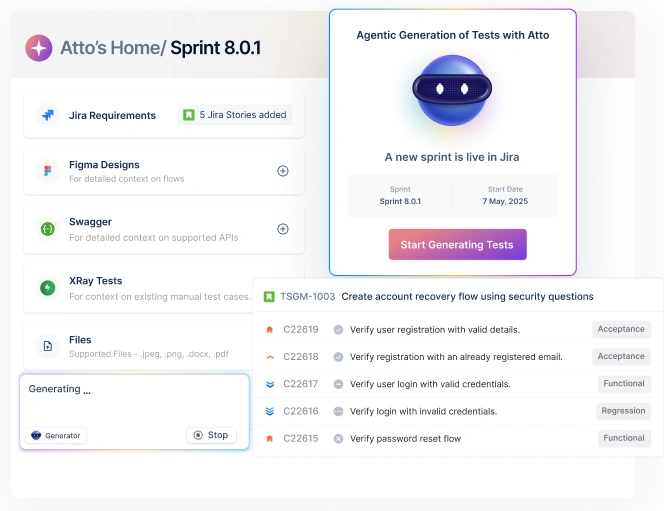



Prompt Templates for Pro-level test cases
Get prompt-engineered templates that turn requirements into structured test cases, edge cases, and negatives fast every time.

Table Of Contents
- 1 Overview
- 2 What Does a Software Tester Do?
- 3 Step-by-Step: How to Become a Software Tester With No Experience
- 3.1 Step 1: Learn the Fundamentals of Testing
- 3.2 Step 2: Practice Test Cases, Test Plans, and Bug Reporting
- 3.3 Step 3: Build Skills in Automation and AI-powered Testing
- 3.4 Step 4: Create a Testing Portfolio
- 3.5 Step 5: Gain Real-World Exposure Through Projects
- 3.6 Step 6: Prepare for Interviews (Manual + Automation)
- 4 Career Paths in Software Testing
- 5 Skills Required to Become a Software Tester
- 6 Tools You Must Learn to Become a Software Tester (Beginner to Advanced)
- 7 AI Knowledge for Testers: What Modern Testers Must Know
- 8 How to Learn Automation Testing?
- 9 How to Become an Automation Tester (If You’re Starting From Manual Testing)
- 10 Becoming a Software Tester Without a Degree (Realistic Path)
- 11 Average Salary of Software Testers in the Top Countries
- 12 Best Resources to Study and Become a Software Tester
- 13 Common Mistakes Beginners Make (and How to Avoid Them)
- 14 Is Software Testing a Good Career in 2026?
- 15 FAQs
Overview
A software tester ensures applications work correctly, safely, and as users expect before release. Testers combine analytical thinking, technical knowledge, and user empathy to design tests, identify risks, validate fixes, and support quality decisions across development cycles.
How to become a software tester
- Learn testing fundamentals
- Understand SDLC and Agile
- Practice test case writing
- Improve bug reporting skills
- Build manual testing expertise
- Learn basic automation concepts
- Understand APIs and data testing
- Create a testing portfolio
- Gain hands-on project experience
- Prepare for manual and automation interviews
The demand to become a software tester continues to rise because businesses cannot afford failures in production. From fintech and healthcare to SaaS and AI platforms, testing now influences customer trust, security, and revenue. With opportunities across manual testing, automation, and AI-assisted testing, this career offers long-term stability, continuous learning, and strong growth potential.
Platforms like Testsigma reflect this shift by enabling modern, scalable testing practices trusted by teams worldwide.
What Does a Software Tester Do?
A software tester ensures that applications work as expected before they reach users. The role combines requirement understanding, risk analysis, execution, and communication to protect product quality across releases.
Typical Day-to-day Tasks
A tester’s day follows a structured quality loop that starts with understanding requirements and ends with clear feedback to the team.
Daily testing workflow:
- Analyze business intent and risks
- Design test scenarios and test cases
- Prepare test data and environments
- Execute manual or automated tests
- Identify, log, and track defects
- Collaborate with developers for fixes
- Re-test and validate fixes
- Update test reports and documentation
Key Responsibilities across Manual and Automation Testing
While tools differ, the responsibility remains the same: prevent defects from reaching users.
- Understand requirements and expected user behavior
- Design meaningful test scenarios and coverage
- Execute tests manually or through automation
- Identify functional, usability, and reliability issues
- Log clear, reproducible defects
- Validate fixes and support release decisions
Core Skills Recruiters Expect
Recruiters look for testers who combine technical awareness with strong thinking and communication skills.
- Empathy for end users and business goals
- Analytical and critical thinking
- Attention to detail and risk awareness
- Clear written and verbal communication
- Structured documentation and reporting discipline
Step-by-step: How to Become a Software Tester with No Experience
Many professionals successfully become a software tester without experience by following a structured approach rather than chasing tools randomly.
Step 1: Learn the Fundamentals of Testing
Begin by understanding how software is built and tested in real teams.
Learn core concepts such as SDLC and STLC, types of testing, defect lifecycle, and Agile workflows. These fundamentals help you understand when testing happens, why it matters, and how testers fit into the development process.
Step 2: Practice Test Cases, Test Plans, and Bug Reporting
Testing skills develop through practice, not theory alone. Pick familiar applications and write test cases based on user behavior. Design simple test plans to understand scope and priorities, and practice writing clear bug reports with steps to reproduce, expected results, actual results, and supporting evidence.
Step 3: Build Skills in Automation and AI-Powered Testing
Once manual concepts are clear, start learning automation basics. Understand what automation solves, where it is useful, and how AI-assisted tools improve test creation and maintenance. Even limited exposure to automation and AI-driven testing shows readiness for modern testing roles.
Step 4: Create a Testing Portfolio
A portfolio proves your skills more effectively than certificates. Include sample test cases, bug reports, and small automation examples. This demonstrates your thinking process, attention to detail, and ability to apply testing concepts in realistic scenarios.
Step 5: Gain Real-World Exposure through Projects
Apply your learning in real environments through internships, freelance work, or open-source contributions. These experiences help you understand team workflows, real defects, and release cycles: bridging the gap between learning and professional testing.
Step 6: Prepare for Interviews (manual + Automation)
Testing interviews focus on fundamentals, problem-solving ability, and practical judgment. Prepare by revising core concepts, practicing scenario-based questions, and working with real-world testing tools.
Platforms like Testsigma help simulate industry workflows, making interview preparation more aligned with actual job expectations.
Career Paths in Software Testing
Software testing offers multiple career paths that grow with your skills, interests, and exposure to technology rather than fixed job titles or linear progression.
- Manual Tester: Focuses on exploratory testing, usability validation, requirement analysis, and business logic verification.
- Automation Tester: Designs and maintains automated test suites for regression, integration, and cross-platform testing at scale.
- SDET (Software Development Engineer in Test): Combines programming and testing expertise to build frameworks, tooling, and quality infrastructure.
- Performance and Security Tester: Specializes in load, stress, and security testing to identify system bottlenecks, risks, and compliance gaps.
- AI-Augmented Tester: Uses AI-driven test generation, self-healing automation, and predictive analytics to improve coverage and efficiency.
A software tester career path remains flexible, allowing professionals to move across roles as technology and testing practices evolve.
Skills Required to Become a Software Tester
A successful software tester balances technical knowledge with strong thinking and communication skills. Both sets are equally important for delivering real quality.
| Technical Skills | Soft Skills |
| Understanding SDLC and STLC | Clear and structured communication |
| Agile and Scrum practices | Curiosity and questioning mindset |
| Test design techniques | Analytical thinking |
| Basic programming (Python, Java, JavaScript) | Problem-solving ability |
| API testing fundamentals | Attention to detail |
| SQL for data validation | User empathy |
| Git and version control | Collaboration with teams |
| Prompt engineering for AI tools | Documentation discipline |
Tools You Must Learn to Become a Software Tester (beginner to Advanced)
Testing tools help software testers work systematically, collaborate with teams, and scale quality efforts as applications grow. While tools do not replace fundamentals, knowing the right ones at each stage makes testing more effective and career-ready.
Manual Testing Tools
Manual testing tools support requirement tracking, defect reporting, and clear documentation.
- JIRA, Bugzilla: Used for logging, tracking, and managing defects across development cycles
- TestRail, Zephyr: Help organize test cases, test plans, and execution status
- Confluence, Google Docs: Used for writing test strategies, scenarios, and reports
These tools ensure testing remains structured, traceable, and aligned with project goals.
Automation Testing Tools
Automation tools help testers validate repetitive and regression scenarios efficiently across platforms.
- Selenium: Widely used for web automation across browsers
- Cypress, Playwright: Modern tools focused on fast, reliable front-end testing
- Appium: Used for mobile application automation on Android and iOS
- Postman, REST Assured: Common tools for API testing and validation
Automation testing tools form the foundation for scalable and repeatable testing practices.
Test Management Tools
Test management tools provide visibility into test coverage, progress, and quality metrics.
- Track test case execution and results
- Monitor defect trends and release readiness
- Generate reports for stakeholders and audits
These tools help teams make informed release decisions based on quality data.
Low-Code and AI-Powered Tools
Low-code and AI-powered platforms simplify automation and reduce maintenance effort.
- Testsigma enables testers to create automated tests using natural language
- AI-assisted features support test generation, self-healing automation, and faster feedback
- Suitable for both beginners and experienced testers working in fast-paced environments
Such tools allow testers to focus more on test logic and quality strategy rather than scripting complexity.
AI Knowledge for Testers: What Modern Testers Must Know
AI is reshaping how testers design, execute, and maintain quality at scale.
What AI Changes in Software Testing
AI accelerates test case creation, reduces automation maintenance through self-healing scripts, predicts defect-prone areas using data patterns, and improves test coverage by identifying hidden scenarios that manual or traditional automated testing often misses.
Skills Testers Should Learn in the AI Era
Foundational AI skills for modern testers:
- Prompt engineering for accurate test generation
- Understanding LLM behavior and limitations
- Using AI-assisted testing tools effectively
- Validating and reviewing AI-generated test artifacts
- Applying human judgment to AI outputs
Future Testing Roles in the AI Age
Future testers will spend less time executing repetitive tests and more time validating AI outputs, analyzing quality risks, defining testing strategies, and ensuring ethical, reliable software behavior across complex, AI-driven systems.
How to Learn Automation Testing?
Automation testing is best learned step by step, with focus on understanding purpose before tools.
- Understand how automation frameworks organize test logic, execution flow, reporting, and maintenance
- Choose one automation language such as Python, Java, or JavaScript based on the tools you plan to use
- Practice using low-code automation tools to focus on test scenarios rather than syntax complexity
- Build real-world test suites by automating login flows, APIs, dashboards, and regression paths
- Strengthen skills by maintaining tests, handling failures, and improving reliability over time
An effective automation tester roadmap prioritizes clarity, consistency, and real project relevance over speed.
How to Become an Automation Tester (if You’re Starting From Manual Testing)
Moving from manual to automation testing is a natural progression as projects scale and speed becomes critical. The transition works best when built on strong testing fundamentals rather than rushed tool adoption.
When Should You Move From Manual to Automation?
When:
- Regression testing becomes frequent and time-consuming
- Release cycles shorten and require faster validation
- Test cases are repetitive and stable across builds
- Manual execution starts limiting coverage and speed
Skills to Add
Here’s a list of the useful ones:
- Basic programming concepts and logical flow
- API testing fundamentals
- Understanding CI/CD pipelines
- Git and version control basics
- Automation frameworks and test structure
| Remember: Focus on real application flows such as login, workflows, or API validation instead of isolated scripts. Demonstrating practical automation work clearly signals readiness to become an automation tester. |
Becoming a Software Tester without a Degree (realistic Path)
A formal degree can help, but it is not required to enter software testing. What one really needs is:
- Strong understanding of testing fundamentals and real-world workflows
- Practical portfolios with test cases, bug reports, and automation examples
- Hands-on experience through internships, freelance work, or open-source projects
- Relevant certifications that validate testing knowledge
- Active participation in testing communities and continuous learning
Many professionals become software testers by consistently demonstrating skills, problem-solving ability, and real testing experience rather than relying solely on academic qualifications.
Average Salary of Software Testers in the Top Countries
The software tester salary varies by skills, automation exposure, and domain expertise.
| Country | Average Salary (USD/year) | Entry Level | Senior Level |
| USA | 95,000 | 65,000 | 1,30,000 |
| UK | 55,000 | 35,000 | 80,000 |
| India | 12,000 | 6,000 | 25,000 |
| Germany | 60,000 | 40,000 | 90,000 |
| Canada | 70,000 | 45,000 | 1,00,000 |
(Indicative averages based on market trends)
Best Resources to Study and Become a Software Tester
Choosing the right learning resources helps you build strong fundamentals, gain practical exposure, and stay aligned with real industry expectations.
| Resource Category | Trusted Examples |
| Beginner Guides | Testsigma Blog (testing fundamentals), Ministry of Testing articles, Guru99 Software Testing tutorials, Software Testing Help (SDET-focused guides) |
| Courses and certifications | ISTQB Foundation Level, BBST (Black Box Software testing), Coursera software testing courses, Udemy testing and automation tracks |
| Tools and Practice Platforms | Testsigma (real-world automation practice), Postman (API testing), Selenium Playground, Cypress examples, GitHub open-source test projects |
| Communities and YouTube Channels | Ministry of Testing Community, Software Testing Club, Test Automation University (YouTube), Automation Step by Step channel |
| Testsigma Academy and Learning Resources | Testsigma Academy courses, documentation-driven tutorials, AI testing guides, real project-based learning modules |
Common Mistakes Beginners Make (and How to Avoid Them)
Early missteps can slow learning and career progress.
- Over-focusing on tools
Avoid this by first mastering testing concepts, workflows, and thinking patterns before expanding tool knowledge.
- Not building a portfolio
Avoid this by documenting test cases, bug reports, and small automation examples to prove practical skills.
- Skipping fundamentals
Avoid this by strengthening basics like SDLC, test design, and defect lifecycle before moving to automation or AI.
Is Software Testing a Good Career in 2026?
Software testing remains one of the most resilient and evolving tech careers. As systems grow smarter and risks increase, the need to become a software tester who understands quality, automation, and AI has never been stronger.
For those willing to learn continuously and think critically, this path offers relevance, stability, and long-term growth well beyond 2026. Streaming real-world testing workflows through platforms like Testsigma can help testers build practical skills that align closely with modern industry expectations.
FAQs
With focused and consistent learning, most beginners can become job-ready within 4–6 months. Progress depends on practice, hands-on exposure, and understanding testing fundamentals.
Both play important roles in software quality. Manual testing builds strong foundations, while automation adds speed, scalability, and long-term career growth.
Yes, many testers begin without coding knowledge. However, learning basic programming significantly improves automation readiness and career opportunities.
No, AI supports testing by improving speed and coverage. Human judgment remains essential for risk analysis, validation, and decision-making.