




Table Of Contents
Key Takeaways
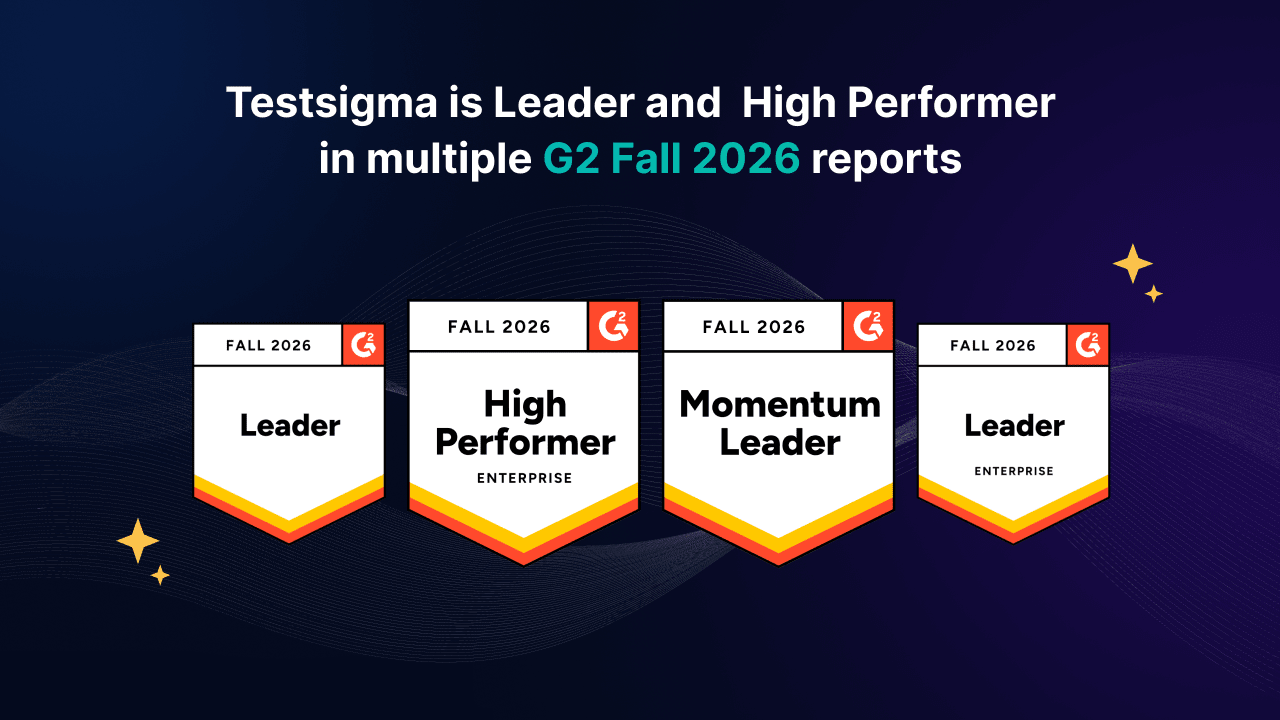
- Testsigma earned Leader, Momentum Leader, and High Performer recognitions across multiple G2 Fall 2026 categories, including AI Software Testing Tools, Test Management, Automation Testing, Software Testing, and DevOps.
- The recognitions arrive as AI accelerates software development, pushing QA and engineering teams toward continuous verification instead of one-time test execution.
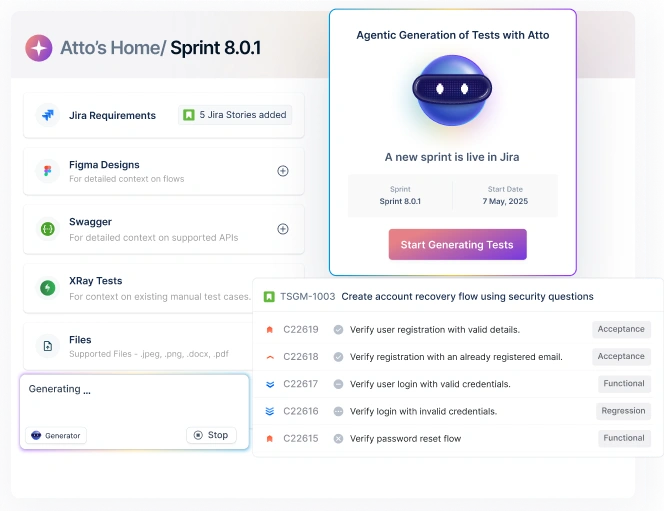
- Testsigma is evolving as an agentic testing platform, using AI to help teams move from requirements to coverage, adapt tests as applications change, and gain release confidence.
- The platform is being built as a verification harness for AI-native software teams, connecting requirements, coverage, automation, maintenance, execution, and quality signals.
- G2 recognitions are based on real user feedback across organization sizes and regions, reflecting Testsigma’s growing adoption among modern QA and engineering teams.
Testsigma has been recognized across multiple categories in G2’s Fall 2026 Reports, earning Leader, Momentum Leader, High Performer, and other distinctions in AI Software Testing Tools, Test Management, Automation Testing, Software Testing, and DevOps.
These recognitions come at a time when the way software is built is changing rapidly. AI is enabling development teams to generate, modify, and ship software faster, creating a new challenge for QA and engineering teams: how do you continuously verify software when the software itself is changing faster?
Testsigma is built for this shift. As an agentic testing platform, Testsigma brings AI into the testing lifecycle to help teams move from requirements to coverage, continuously validate changes, and release with confidence.
Testing Needs to Keep Pace with AI-Driven Development
Software development has entered an AI-driven era. Developers can generate code faster, teams can ship changes more frequently, and applications continue to evolve at an unprecedented pace.
Testing has to keep up.
Traditional automation remains essential, but simply executing a predefined set of tests is no longer enough. Teams also need to understand what has been covered, what has changed, where gaps exist, and whether the software is ready to ship.
This is where testing is evolving, from test execution toward continuous verification and quality intelligence.
Testsigma combines AI-powered test automation with visibility into coverage and release confidence, helping teams keep verification connected to the pace of modern development.
From Test Automation to Agentic Quality Engineering
Agentic test automation brings AI deeper into the testing lifecycle.
Instead of relying solely on manually created and maintained automation, AI can help teams create tests, adapt them as applications change, execute coverage, and analyze results.
The goal isn’t simply to automate more tests.
It’s to make quality engineering more adaptive, connected, and continuous.
With Testsigma, teams can move from requirements to test coverage, automate critical workflows and regression scenarios, maintain tests as applications evolve, and gain clearer quality signals before release.
As AI-generated and AI-assisted code becomes part of everyday development, this adaptive approach becomes increasingly important. The faster software changes, the harder it is for testing processes that depend on static, manually maintained automation to keep pace.
A Verification Harness for AI-Native Software Teams
AI-native development is creating a new kind of software lifecycle, one where code can be generated, changed, tested, and shipped at a much faster pace.
That requires a verification layer capable of moving at the same speed.
Testsigma is building toward that future as the verification harness for AI-native software teams.
The idea is straightforward: as AI accelerates how software is built, verification needs to continuously keep up with what is being built.
This means connecting requirements, coverage, automated testing, maintenance, execution, and quality signals so teams can understand not just whether tests passed, but how confidently they can release.
For QA teams, this means spending less time maintaining automation and more time focusing on quality. For engineering teams, it means faster feedback on changes. And for organizations, it means making release decisions with greater visibility and confidence.
Why This Recognition Matters
G2 recognitions are particularly meaningful because they reflect feedback from users evaluating and using software in real-world environments.
For Testsigma, the Fall 2026 results reinforce the platform’s evolution alongside the changing needs of modern QA and engineering teams.
The recognitions span Automation Testing, Software Testing, AI Software Testing Tools, Test Management, and DevOps, across different organization sizes and regions.
That breadth reflects how quality has become a shared responsibility across the software lifecycle.
Automation helps teams build and execute coverage. Test management helps organize and manage that coverage. AI helps teams create and maintain tests more efficiently. And DevOps brings testing closer to continuous delivery.
Together, these capabilities support a more connected approach to software quality, one designed for the speed and complexity of modern development.
Built for the Next Generation of Testing
The future of testing isn’t just about running more automated tests.
It’s about creating a system that can understand what is changing, adapt verification to those changes, identify gaps, and help teams determine whether they are ready to release.
That’s the direction Testsigma is taking with agentic test automation.
By bringing AI deeper into the testing lifecycle, Testsigma helps teams expand coverage, reduce the effort required to maintain automation, and gain the quality signals they need to make confident release decisions.
The Fall 2026 G2 recognitions are another milestone in that journey and a reflection of the growing need for smarter, more adaptive approaches to software quality.
What’s Next?
As AI continues to reshape software development, the distance between building software and verifying software will continue to shrink.
Testing will increasingly need to be part of the development loop; not a final checkpoint.
Testsigma’s focus is to help make that possible: bringing agentic AI deeper into testing, expanding coverage, reducing the effort required to maintain automation, and giving teams the quality signals they need to release with confidence.
Build faster. Verify continuously. Release with confidence.