
A release quality gate that knows
if you’re safe to ship.





















Every check passed, and the untested
flow still shipped.
Green doesn’t necessarily mean safe
A pipeline can show every check green while the one test that mattered, the one covering the flow that changed this sprint, doesn’t exist.
Stacking more gates anyway
Teams stack more gates: code coverage thresholds, linting, security scans. None of them ask if the specific thing built this sprint is actually verified.
The old way
A senior engineer eyeballs the diff before approving, or nobody catches it until it’s in production and a customer finds the gap first.
Fires on risk, calibrated to your team.
It’s risk-aware.
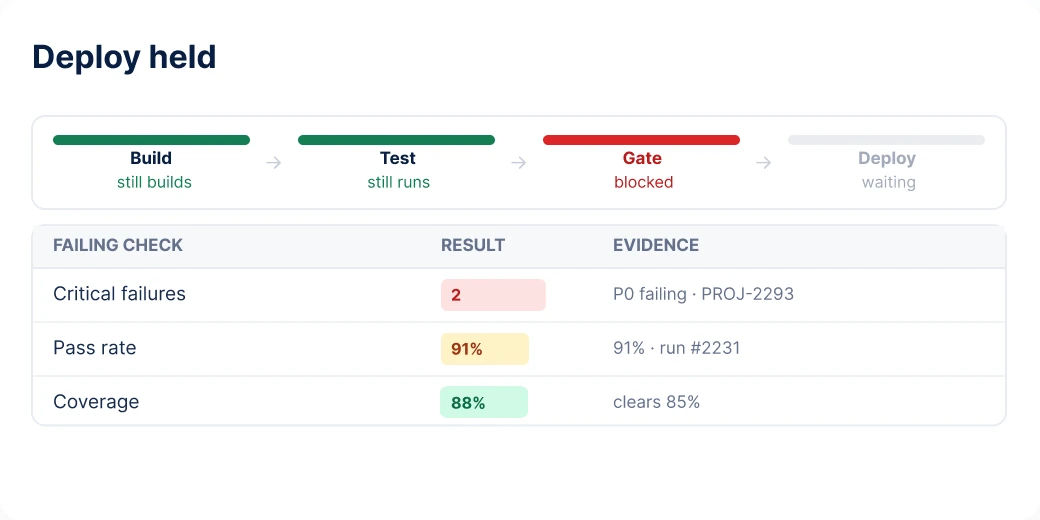
The gate fires on release confidence and critical-path coverage. A build can be green everywhere else and still come back BLOCKED here.
It’s specific about why.
A BLOCKED gate names the exact story, flow, and confidence score behind it, backed by evidence rather than a red X with nothing attached.
It’s yours to calibrate.
Thresholds are set to your team’s own risk tolerance. A payments team can set a higher bar than a marketing site team, on the same platform.
The three gate states.
READY
A pipeline can show every check green while the one test that mattered, the one covering the flow that changed this sprint, doesn’t exist.
CONDITIONAL
Teams stack more gates: code coverage thresholds, linting, security scans. None of them ask if the specific thing built this sprint is actually verified.
NOT READY
A senior engineer eyeballs the diff before approving, or nobody catches it until it’s in production and a customer finds the gap first.
how it works
Score in. Gate state out.
The score comes in
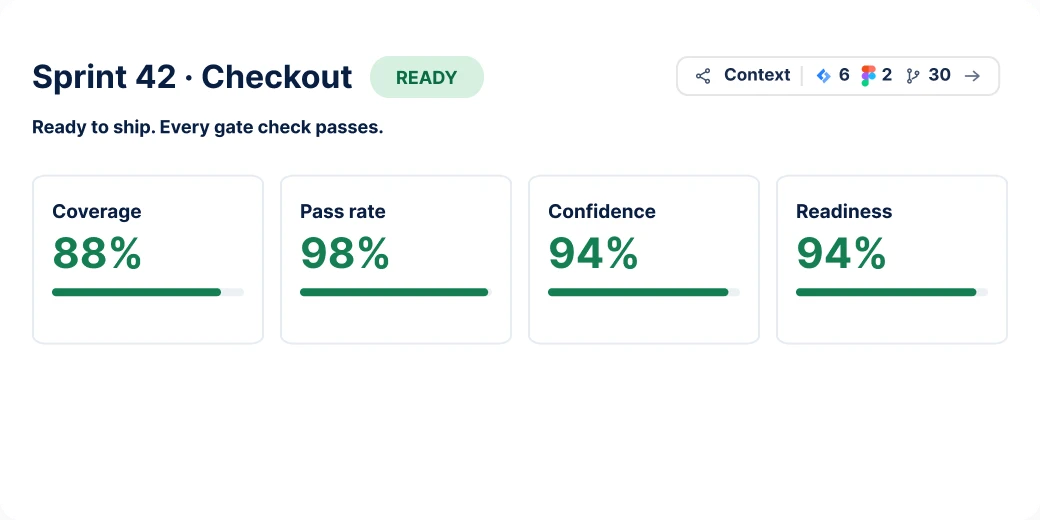
Every Sprint gets a release confidence score, with coverage and confidence bounds attached.
Checked against your thresholds
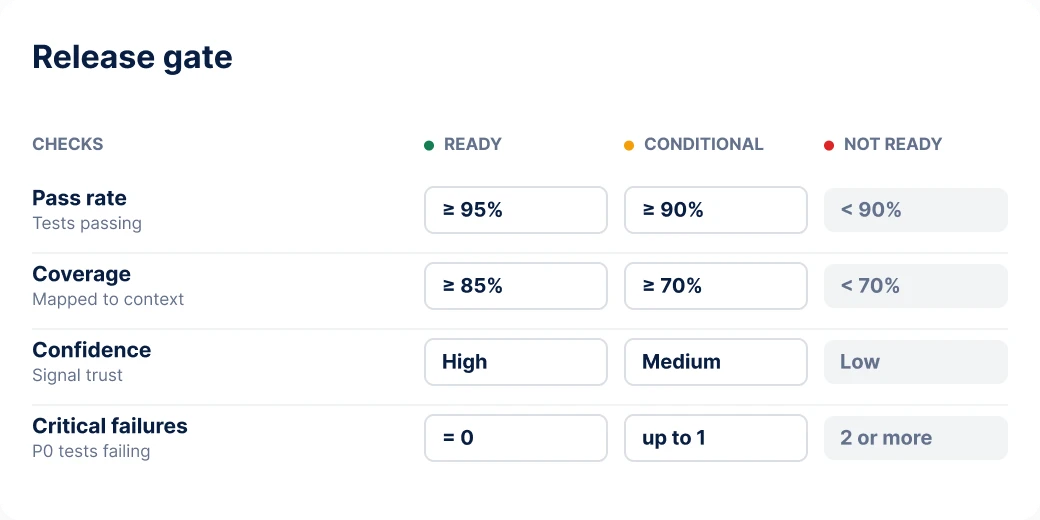
You define what counts as safe, risky, and blocked for your team.
The gate state is set
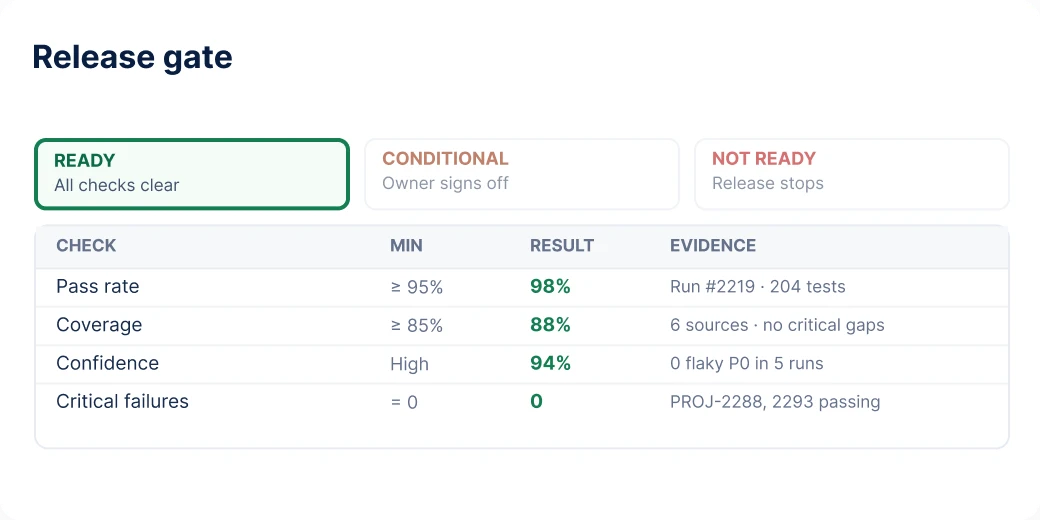
READY, CONDITIONAL, or NOT-READY, with the specific evidence attached.
Gate wires into your pipeline
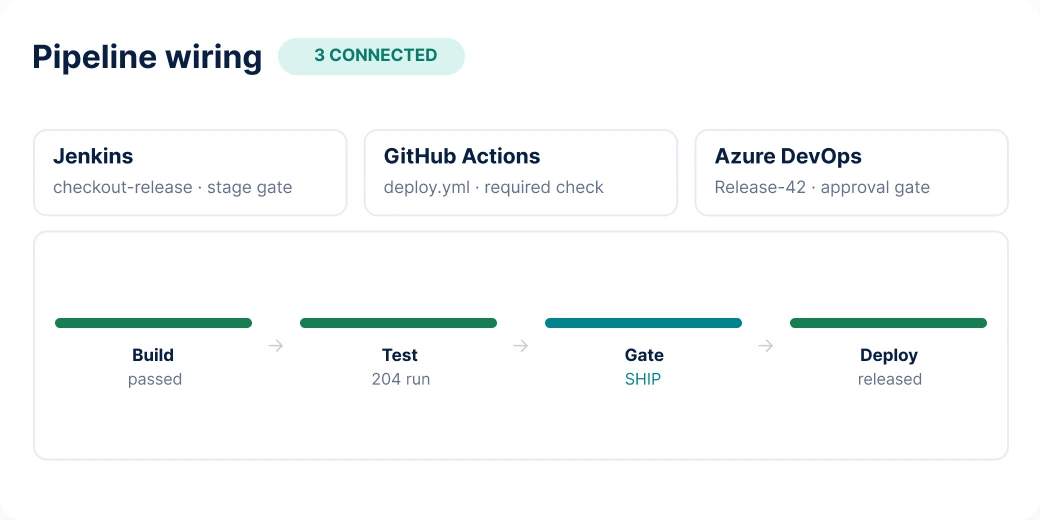
Status feeds straight into Jenkins, GitHub Actions, or Azure DevOps.
A BLOCKED gate stops the deploy
Tests still run, builds still build; only the deploy step waits.
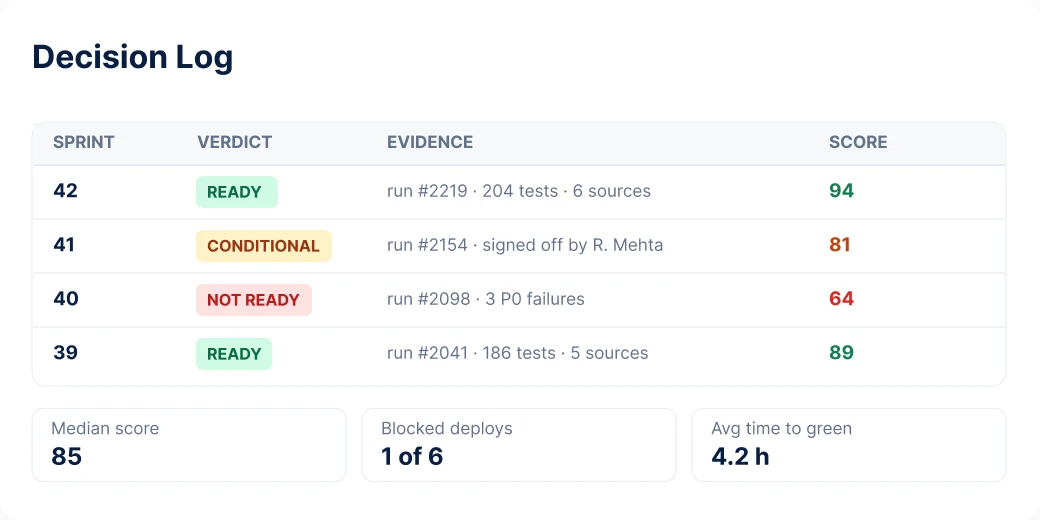
Every decision gets logged
The next release conversation starts with data, not memory.
Who is it for
One confident release. One answer.

QA teams
You sign off on it. The coverage number is what you actually verified this sprint, not a guess you’re vouching for.

Engineering leaders
You’re accountable for it. Named evidence and stated confidence back you up, so you can confidently deploy.
Integrations
Plugs into your existing stack.
Context flows in automatically. Results flow back where your team already looks.





















Frequently Asked Questions