
Know what didn’t get tested, before it ships.





















Gaps hide between tools that
never compare notes
Each tool, its own context
Nobody has one view that checks the necessary paths against what the sprint actually shipped.
Gaps don't announce themselves
They sit in the space between systems that never talk to each other, until a bug reaches production and someone asks whether it was covered.
The old way to find a gap
A QA remembers a similar bug from two releases ago, or a customer finds it first. Either way, it's already cost you something.
Names the exact flow that's missing tests,
then closes it.
It's contextual
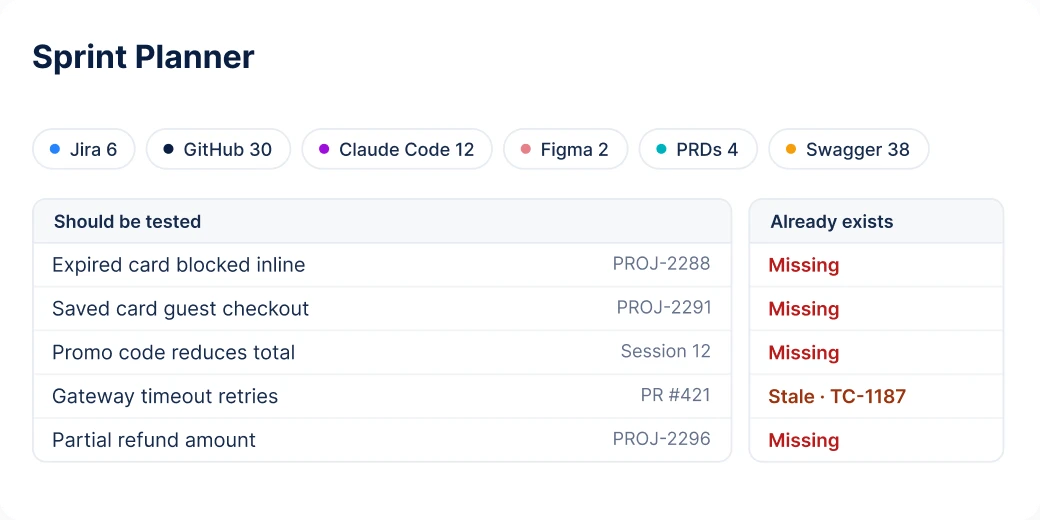
Compares your tests, manual and automated, against the sprint's real source material: Jira stories, GitHub PRs, Figma designs, PRDs, and Swagger specs.
Flags the specific gaps
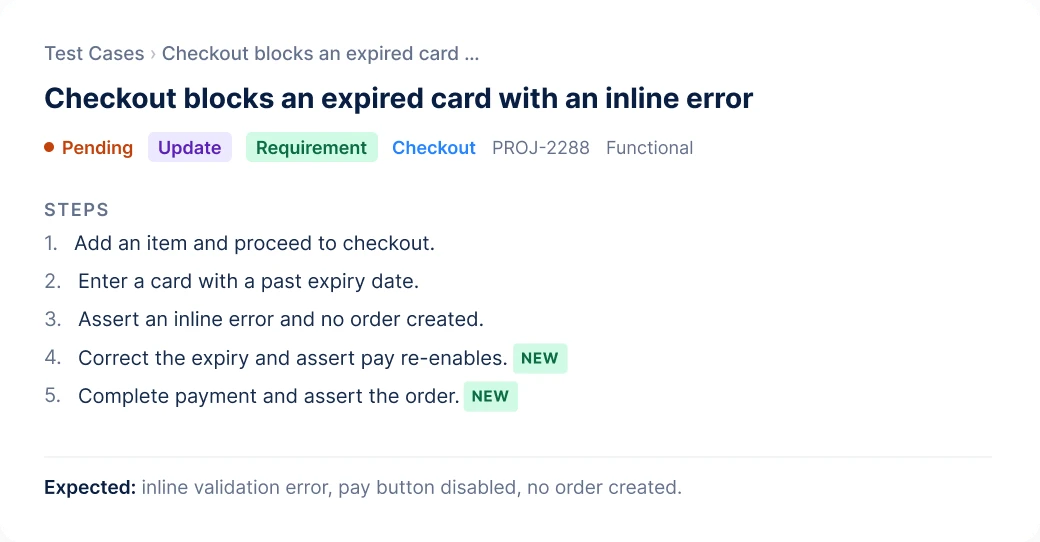
Testsigma names the missing flow or scenario, then drafts the missing test case, grounded in that same story and code context.
It's continuous
Runs every sprint, not once at release time, so a gap surfaces while there's still time to close it.
What it compares your tests against.

Jira stories
What the sprint says you’re building

GitHub PRs
What actually changed in
the code

Claude Code sessions
What being built before it’s
even a PR

Figma designs
What the UI is supposed
to do

Swagger / API specs
What the contract
promises

PRDs
What the feature is supposed
to cover

Historical test data
What’s already been tested,
and how recently
How release confidence scoring works
Identified to closed, in one pass.
Find the gaps.
Integrate with your STLC sources to check what should be tested against requirements, and identifies what's missing.
Create the missing test
Testsigma's Generator agent writes the test case, grounded in the actual story and code context.
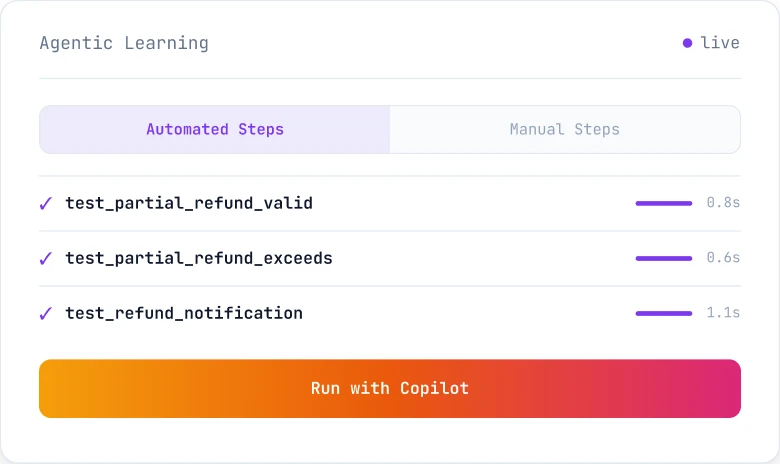
Run the new tests
The new test runs right away, so you get a real pass or fail, not just a checkbox.
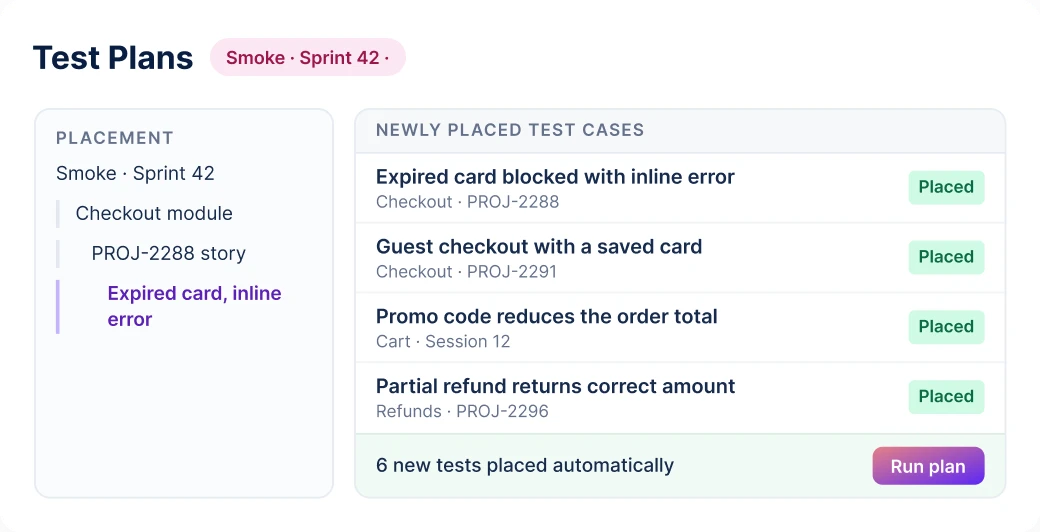
Add to the right test plan
The test lands in the right module, sprint, and story automatically.
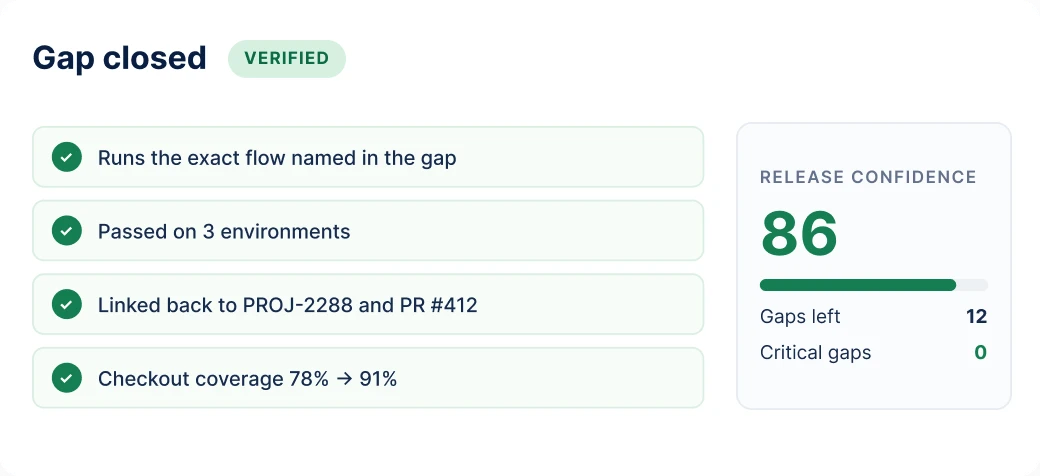
Confirm it's closed
Testsigma checks the tests against the gaps, confirms coverage, and updates your release confidence score.
Who is it for
One confident release. One answer.

QA teams
You sign off on it. The coverage number is what you actually verified this sprint, not a guess you’re vouching for.

Engineering leaders
You’re accountable for it. Named evidence and stated confidence back you up, so you can confidently deploy.
Integrations
Plugs into your existing stack.
Context flows in automatically. Results flow back where your team already looks.





















Frequently Asked Questions