





The Testsigma Quality Awards are in their second year. Quality work is invisible when it goes well, and nobody sends a note about the release that didn’t break. Every World Testers Day we fix that for a few teams.
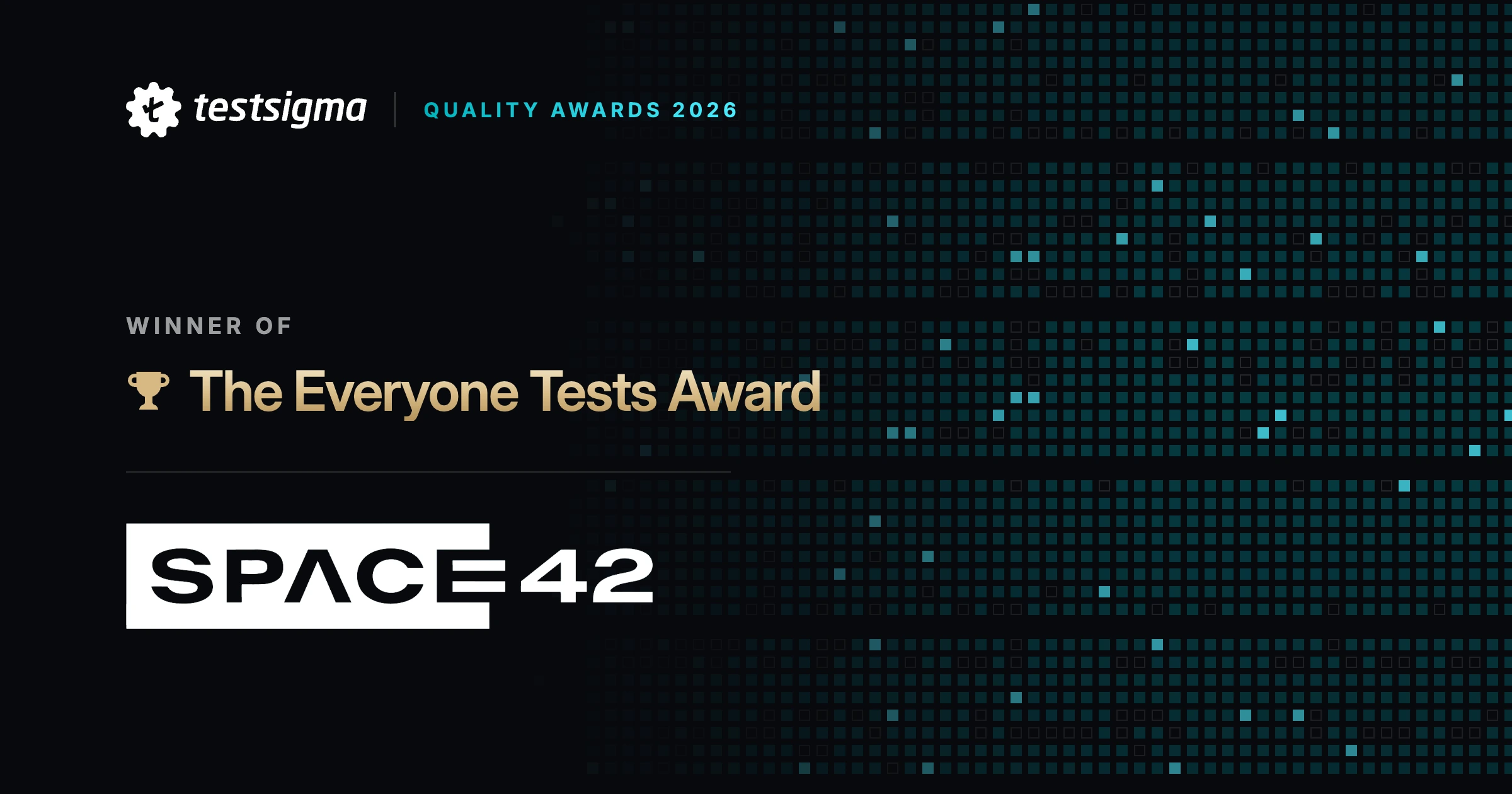
Nominations came in across all four categories this year, from customer QA teams of every size, and the panel judged them on the strength of the story and impact. The Everyone Tests Award goes to a team that made testing something the whole organisation gets the benefit of, instead of a queue that forms in front of QA. It went to Space42.
Every new feature Space42 shipped added one more thing to manually check before the next release. The platform was adding features fast. You can do that arithmetic in your head, and Devendra Singh Josan’s team did.
Table Of Contents
Growing Faster Than QA Could Check
Space42 is the Abu Dhabi space technology company, and its QA team had been working the way good QA teams work: close to developers and product, validating new features as they were built, catching defects, running a regression pass before every release.
That held until the platform scaled. More features meant more workflows, more workflows meant more manual regression, and holding the same coverage at the same speed got harder every single cycle.
Two ways out were obvious and both were bad. Slow the releases down, or test less of the product.
Stability First, Coverage Second
The team went after the hours instead, and they were deliberate about the order. Key workflows first, the ones eating the most manual time. Then stability, before anyone chased a coverage number, because a suite that fails at random costs more attention than the manual pass it replaced.
Only after that did they widen it. The target Devendra set the team was testing that comes back faster, stays consistent, and doesn’t get harder to maintain as the platform keeps growing. A bigger pile of scripts was never the goal.
The result is that a change now gets tested as it lands, whether or not a tester is free to look at it. QA didn’t get smaller. Its reach got bigger.
60% Automated in Just over Four Months
Roughly 60% of Space42’s current platform scope runs on automation today, covering the key modules and critical workflows that used to eat the most manual hours. Regression that meant serial manual passes now runs in parallel and comes back faster.
That gives the team back real time, and they spend it where automation can’t help: new features, edge cases, and the failures a script won’t flag on its own.
What the team is proudest of isn’t the 60%. It’s the four months. They moved from a mostly manual regression process to covering the workflows that mattered most, and releases never slowed down to let it happen.
Next marker is 90%. The plan is more of the same: keep the suite stable, keep widening it.
Why Space42 Won the Everyone Tests Award
What tipped it for the panel was the order they worked in. Plenty of teams can point at a coverage number. Space42 earned theirs by fixing stability first, in four months, without asking a single release to wait.
The Part Worth Stealing
Fix stability before you chase a coverage number. A flaky suite at 60% buys you nothing, and a trustworthy one at 60% buys you the rest of the year.
Congratulations to Devendra and the QA team at Space42. Sixty percent in four months is an achievement. The part that lasts is a suite the team believes when it goes red, and that’s what makes the next 30% possible.